Scar Revision · Newport News
Scar revision in Newport News.
Acne scarring, surgical scars and traumatic scars, treated by sequencing the right tools rather than selling one — on Jefferson Avenue near Kiln Creek, with every price published below.
What a scar is, and what can actually change
A scar is what the body builds when a wound goes deeper than the epidermis. The replacement tissue is collagen laid down fast and in the wrong orientation — parallel bundles instead of the woven basket-weave of undamaged dermis. That is why a scar catches the light differently from the skin beside it, and why no cream reaches it.
Treatment does not remove that tissue and put the original back. It remodels it: breaking up the disorganised collagen, prompting a slower and better-organised repair, and softening the edges so the transition reads less sharply. Scars are improved, not erased. We will tell you how much change is realistic for your scar before anything is booked, and sometimes that answer is not much.
Which scar you actually have
Atrophic scars are the common ones after acne, and they are missing tissue rather than extra. They divide into rolling scars with soft sloping edges, boxcar scars with sharp vertical walls, and ice-pick scars that are narrow and deep. The three do not respond the same way, which is why a single treatment sold for “acne scars” usually disappoints someone.
Surgical and traumatic scars are linear and raised or depressed depending on how they healed. Timing matters here more than anywhere: a scar that is still red and remodelling behaves differently from one that has been settled for five years.
Hypertrophic scars sit raised but stay within the original wound. Keloids grow past it, behave differently, and can be made worse by the wrong intervention. If what you have is a true keloid, a dermatology referral is often the right first move and we will say so at the consultation rather than after four sessions.
The tools, and how they get sequenced
Er:YAG ablative resurfacing, on the Rohrer Spectrum. The erbium wavelength sits close to the peak of water’s absorption, so it removes a controlled thickness of surface with comparatively little heat carried into what is left. Depth is set by pass count, which is what makes it usable for a light peel and for full-field resurfacing on the same platform. Detail is on the laser resurfacing page.
RF microneedling, on the Rohrer Pixel8-RF. Fine needles carry radiofrequency into the dermis and deposit heat at a chosen depth, remodelling collagen without taking the surface off. Because the energy lands below the epidermis rather than through it, it carries a lower risk of pigment change — which is why it is frequently the first tool in richly pigmented skin. See RF microneedling.
Microneedling, on the Dermapen DP4, for shallower textural work and as the gentler entry point in a longer series. PRP is used as an adjunct where it is clinically indicated rather than by default.
Most scar plans use more than one of these in sequence, spaced to let collagen build between visits. The sequence is the clinical work; the devices are just what carry it out.
Er:YAG, CO₂, or fractional RF
These three get compared constantly and the comparison is usually made badly, because they are not three settings of one thing.
CO₂ removes tissue and leaves a wider band of heat behind it, which buys more tightening per pass and costs more downtime and more pigment risk. Er:YAG removes a thinner, more precisely controlled layer with a narrower heated band, which is gentler on pigment and asks for more passes to reach the same depth. Fractional RF does not remove the surface at all; it heats the dermis through it.
None of the three is the best one. The right answer depends on your scar type, your skin type, and how much recovery you can actually take. If you want the physics rather than the marketing, we have written it out with sources on erbium vs CO₂ laser resurfacing.
We run Er:YAG rather than CO₂. Where a CO₂ treatment is genuinely the better tool for what you have, we will say so and point you to someone who runs one.
What we will not tell you
We will not promise a percentage. Published scar studies report improvement in scales and photographs across a series; they do not report erasure, and a clinic quoting you a number for your face has invented it.
You pay per session, so stopping after two is a clinical decision rather than a refund negotiation.
We will not treat through active acne. Resurfacing a face that is still breaking out makes new scars while you are paying to treat the old ones. Getting the acne controlled comes first, and that may mean a referral.
We photograph under standardized lighting at baseline. Scar work develops too slowly to judge in a mirror, and memory is not evidence.
Coming from across the Peninsula
The practice is on Jefferson Avenue in upper Newport News — closer to Tabb, Grafton and Kiln Creek than most of Newport News is, and a straightforward drive from Hampton, Poquoson, Yorktown and Williamsburg without crossing water or a tunnel.
Scar work is worth travelling a little further for in a way that a routine appointment is not, because it is a series rather than a visit and the plan matters more than the device. What we would suggest comparing is not the drive: ask whoever you are considering which ablative device they run, who operates it, and what a full course costs before you start. Those three answers separate a scar plan from a menu item, and they are fair questions to put to us as well.
Every price on this page is published, so you can work out whether the trip is worth it before you call.
What it costs
| Treatment | Price |
|---|---|
| Microneedling — face | $350 |
| RF microneedling — face | $750 |
| RF microneedling — face and neck | $900 |
| Light Er:YAG peel — full face | $700 |
| Full-field Er:YAG resurfacing — full face | $1,200 |
| Atrophic acne scar — Er:YAG | $700 |
| Surgical, traumatic and body scars | quoted |
| Consultation | Free |
You pay per session. A scar course is usually three to four sessions of one modality, sometimes sequenced with another, and you get the full number before anything is booked. PRP, where it is indicated, is quoted separately.
Booking the right thing
Start with the consultation. Scar work is a sequence rather than a single treatment, and which tool goes first depends on which scar you actually have. The consultation is free, and you leave with the plan and its total whether or not you book anything after it.
- Book the free scar revision consultation — no charge, and the right first step for almost everyone reading this page.
- Book microneedling — surgical or traumatic scar, per session — the linear kind, once we have looked at it and agreed the plan.
- Book microneedling — body scar or stretch marks, per session — body work rather than face.
- Book atrophic acne scarring — Er:YAG, per session — ablative resurfacing on the Rohrer Spectrum. Depth is still set at the visit rather than at booking; this one exists as a per-session line for a scar plan already agreed, and resurfacing in general is priced and explained separately.
Those last three are per-session bookings, and they are there for people who have already been assessed here and know what they are returning for. If that is not you yet, book the consultation and we will tell you which of them — if any — is the right one.
Two scar pairs, from the device manufacturer
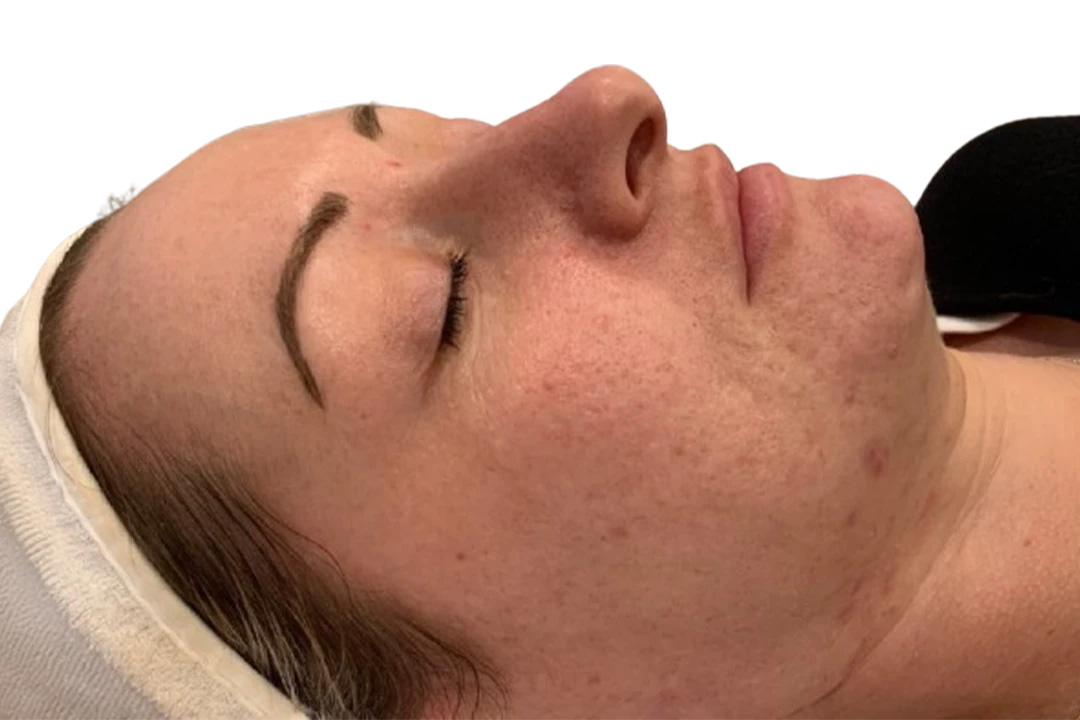
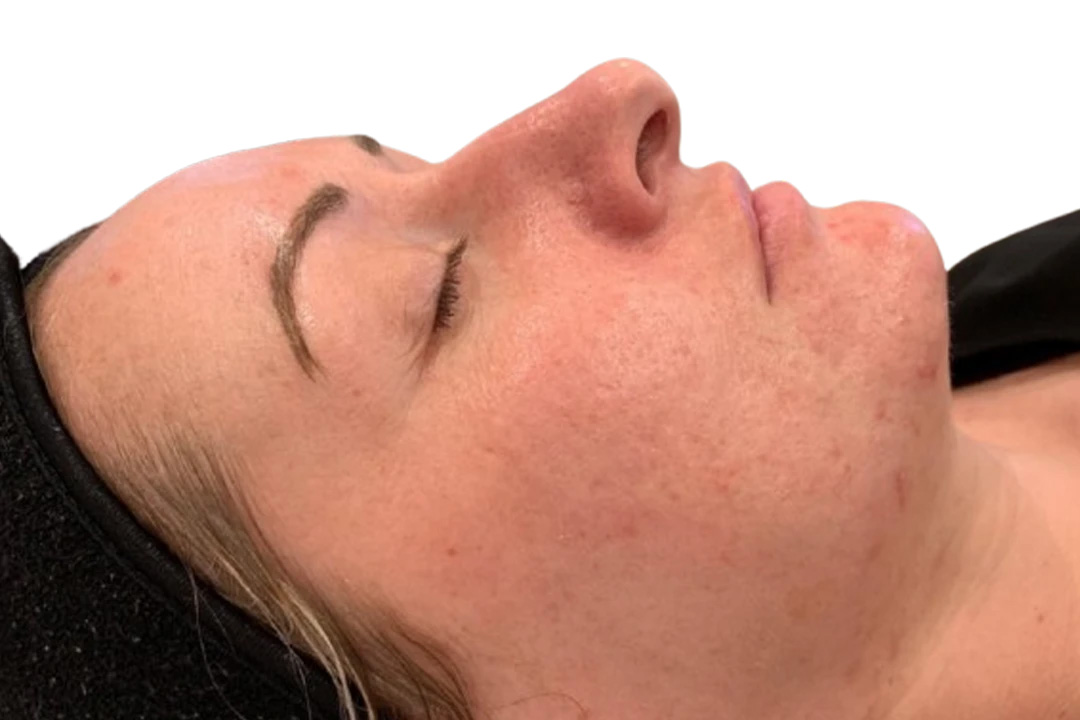
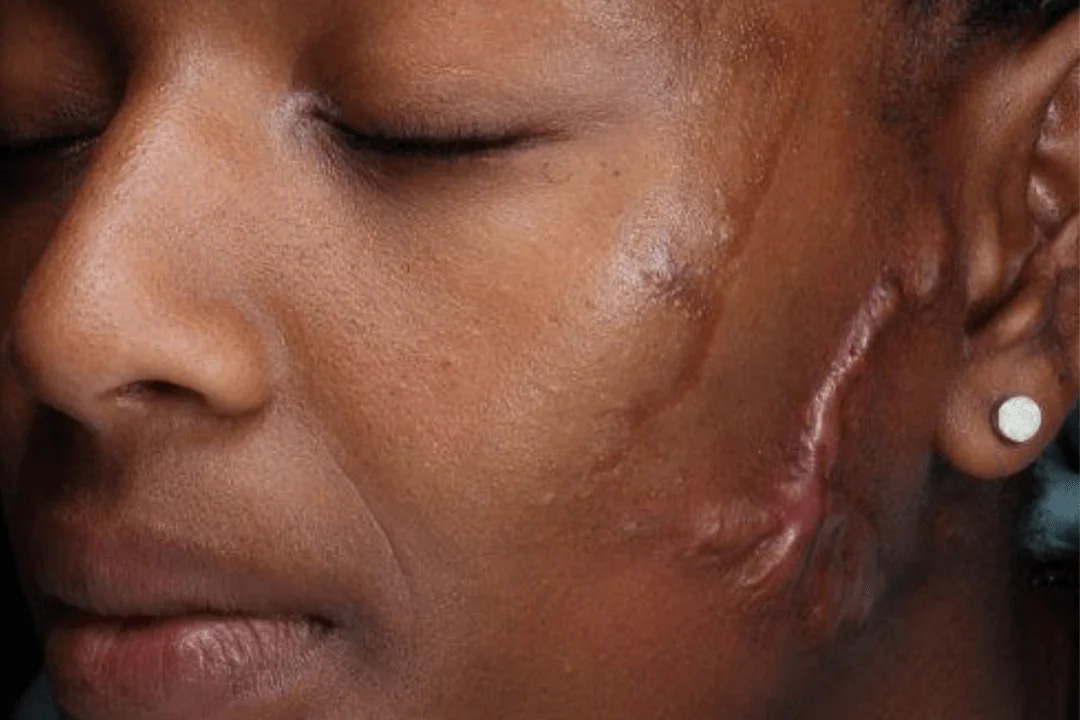
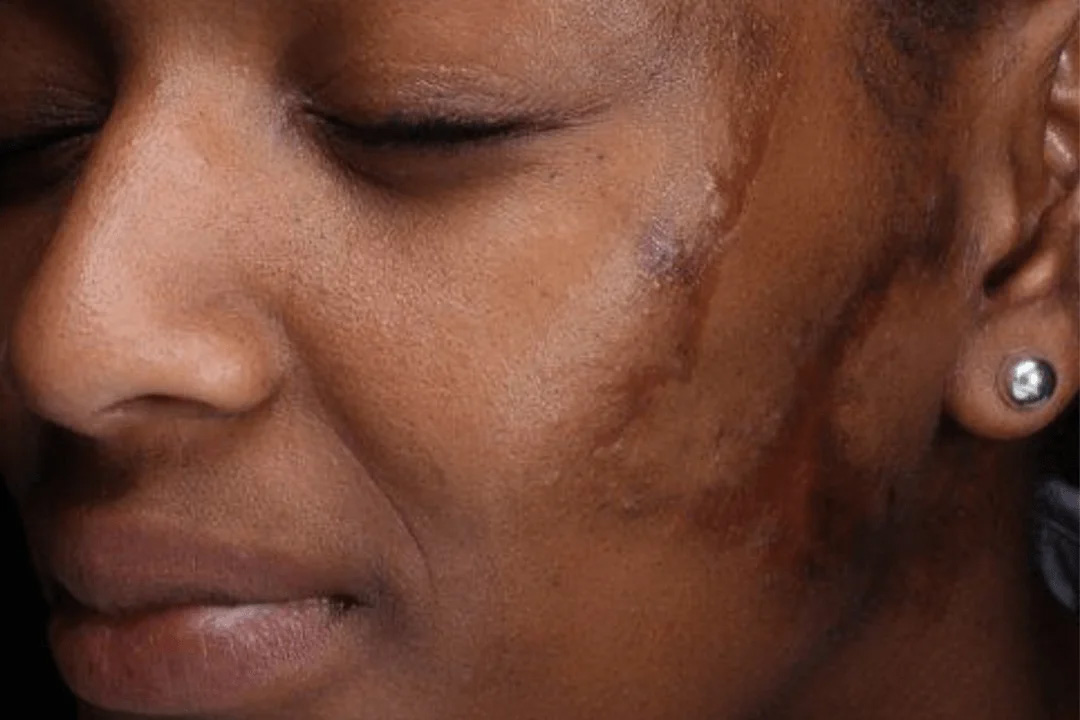
We have no before-and-after photographs of our own scar patients to publish yet. What we do have is the set Dermapen sent us for the DP4 — the mechanical microneedling device described above — and two of those ten pairs are scars. We publish both, including the one showing a scar we would not put a needle near, rather than the flattering one on its own. The whole set, and the material from our other manufacturer, sits on the before and after page.
-
Cheek and jawline with raised bumps and the darker marks left behind by them. In the after photograph the bumps are fewer and the surface reads more even; scattered marks are still there. The headband, the hair and the lighting are not the same in the two frames, which is worth holding in mind when comparing them.
Dermapen 4 marketing photographs · supplied by the manufacturer · no clinician credited · not a patient of this practice
-
A raised, rope-like scar running down the cheek in front of the ear. In the after photograph the scar sits flatter against the skin and its colour is closer to the surrounding cheek; the scar is still plainly there. We publish this pair because it is part of the set Dermapen supplied, not as an offer. Raised and keloid scarring is a relative contraindication for microneedling in many protocols — needling can prompt more scar tissue in skin that scars this way — and it is not a treatment we offer for keloid or raised scarring. A scar like this needs looking at in person by a clinician who treats them.
Dermapen 4 marketing photographs · supplied by the manufacturer · no clinician credited · not a patient of this practice
Questions
Can acne scars be removed completely?
No, and anyone who tells you otherwise is selling something. Atrophic scars are missing tissue and lost collagen architecture, not a stain on the surface. What treatment does is remodel the edges and rebuild collagen underneath so the scar catches light less sharply. Meaningful improvement is realistic across a series. Erasure is not.
Which treatment is right for my scars?
It depends on the scar. Rolling and shallow boxcar scars respond to resurfacing and to RF microneedling. Ice-pick scars often need a different approach entirely because they are narrow and deep. Most people get a sequence rather than one modality, and the sequence is decided after looking at your skin, not from this page.
How many sessions will I need?
Microneedling and RF microneedling are planned in threes and fours, four to six weeks apart, because collagen is built between sessions rather than during them. Ablative resurfacing is sometimes a single deeper procedure with real recovery instead. You get the number and the cost before anything is booked.
What does scar revision cost here?
Microneedling is $350 for the face. RF microneedling is $750 a session for the face. Er:YAG resurfacing runs $700 for a light full-face peel and $1,200 for full-field. The consultation is free, every price is on this page, and you pay per session.
Do you treat keloids?
Cautiously, and often the answer is a referral. Keloid scars grow beyond the original wound and can be made worse by the wrong treatment, including by lasers used the wrong way. If what you have is a true keloid, dermatology is frequently the right first stop and we will say so.
Is this safe in darker skin?
It depends on which tool. RF microneedling delivers its energy below the surface rather than by removing it, which carries a lower risk of pigment change and is often what we reach for first in richly pigmented skin. Ablative resurfacing carries more risk as depth increases. We plan conservatively and tell you where the risk sits before you book.
Two ways to book
Call us
(757) 586-4575. Answered 24 hours a day, including evenings and Saturdays. Most people are booked in about a minute.
Book online
Pick your time on our scheduler — no account or login needed. When you're done, you'll land back here on a Booking confirmed page.
Didn't reach the confirmation page? Then nothing was booked — give us a call and we'll take care of it.
Newport News · Virginia
Start with a consultation. It’s free.
Bring photographs from before the scarring if you have them. You will leave knowing which scar type you have, what sequence we would use, how many sessions it runs to, and what the whole course costs.
Takes about a minute. You'll come back here to a confirmation page when you're booked — if you don't get there, call (757) 586-4575, any hour.