Microneedling · Newport News
Microneedling in Newport News.
The original collagen-induction treatment — and an honest map of when it’s enough. Run as a series rather than a single visit, in Newport News near Kiln Creek.
Microneedling is one of the few aesthetic treatments whose name says exactly what it is: a motorized array of very fine needles creating thousands of controlled micro-channels in the skin. Each channel is a tiny, sterile, deliberate injury — and your skin responds the only way skin knows how, by launching repair: new collagen, new elastin, better organization of the layer that gives skin its structure.
Think of it as thousands of tiny renovation permits. Nothing is demolished — the surface stays intact enough to heal in a day or two — but every permit obligates the skin to rebuild a little, and the cumulative result over a series is smoother texture, tighter-looking pores, and softer shallow scarring.
We perform it with the Dermapen DP4 — an FDA-cleared, medical-grade device (more on it, including its clearance, on our equipment page) — with sterile, single-use needle cartridges opened in front of you, and depth adjusted zone by zone: deeper where scarring lives, shallower over bone and thin skin.
What it treats well
Rough or dull texture, enlarged-looking pores, fine lines, early sun damage, stretch marks over a longer series, and atrophic acne scarring — where it pairs naturally with PRP, applied while the channels are open. It’s also the gentler entry point for younger skin that wants quality maintenance without downtime worth planning around.
Microneedling vs. RF microneedling — the honest map
This is the question that matters, because we offer both and they are not the same treatment at different prices.
Mechanical microneedling (this page) makes channels. The stimulus is the injury itself. It’s less expensive, needs less numbing time, heals in a day or two, and does its best work on surface problems: texture, pores, tone, shallow scars, product and PRP delivery.
RF microneedling makes the same channels, then fires radiofrequency energy between the needles to heat the deeper dermis — adding a thermal remodeling stimulus the mechanical version doesn’t have. That’s what earns it the harder jobs: deeper atrophic scarring and early skin laxity.
The one-line version: if the problem lives on the surface, mechanical is usually enough; if the problem is depth or looseness, mechanical alone will underdeliver and we’ll say so. RF isn’t simply “the better one” for everybody — the right choice follows where the problem sits, and that’s how we’ll plan your series. Plenty of faces here get the $350 treatment because the $350 treatment is the right one.
Pricing
| Treatment | Price |
|---|---|
| Microneedling — facial | $350 |
| Microneedling — neck and décolletage | $400 |
| With HA infusion | $425 |
| With growth-factor serums | $450 |
| With PRP | $750 |
| Microneedling — stretch marks (per session) | $400 |
| Acne scar series and other body work | planned at consult |
Book the one you want
Two of these sit on the online booking list as their own service, so you can go straight to the right one instead of picking through the whole menu.
- Book microneedling — facial — $350 a session.
- Book the microneedling facial with PRP — $750 a session. What PRP is, and the evidence grade we put on it, is on the PRP page.
Neck and décolletage, the HA infusion and stretch mark work are planned at the consultation rather than booked online, because the area and the session count get decided there. The consultation is free.
Most goals want a series of three, spaced about four to six weeks apart — collagen is built between sessions, not during them.
What a session is like
Topical numbing for about thirty minutes, then the treatment itself — fifteen to twenty minutes of what most people describe as a vibrating sandpaper sensation, least comfortable over bone. You’ll leave looking sunburned; that fades through the next day. Expect a day or two of pinkness and dryness, makeup after 24 hours, and strict sunscreen while skin resets. Judge results at three months, against photos, the same rule we apply to everything collagen-based.
Dermapen’s own photographs and video
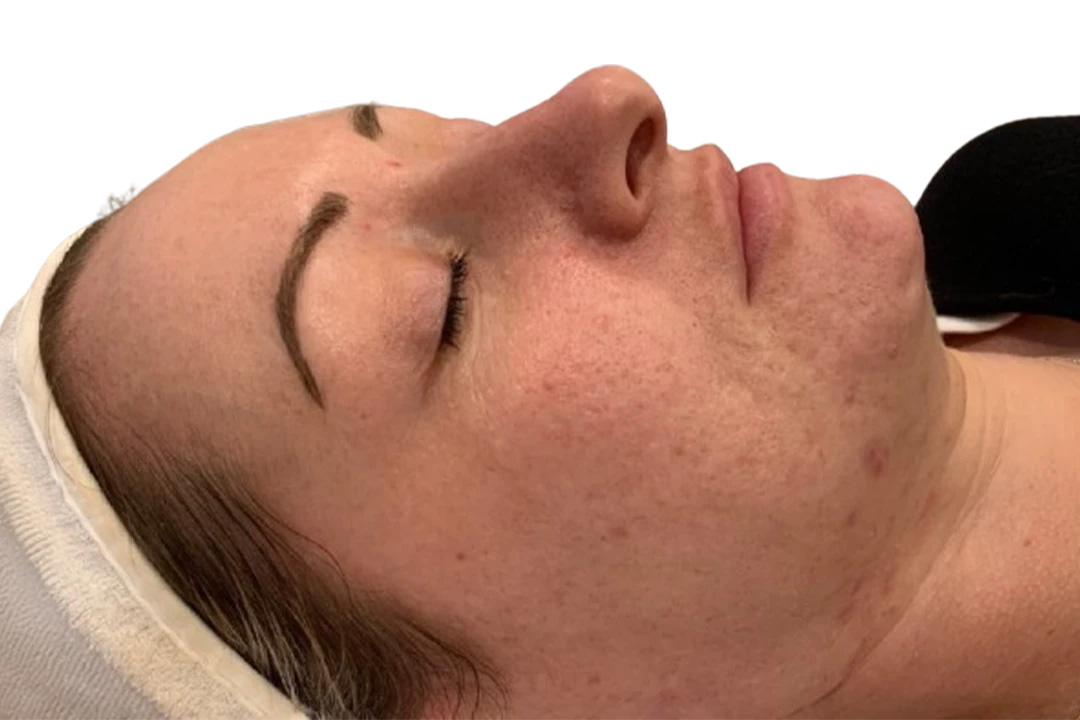
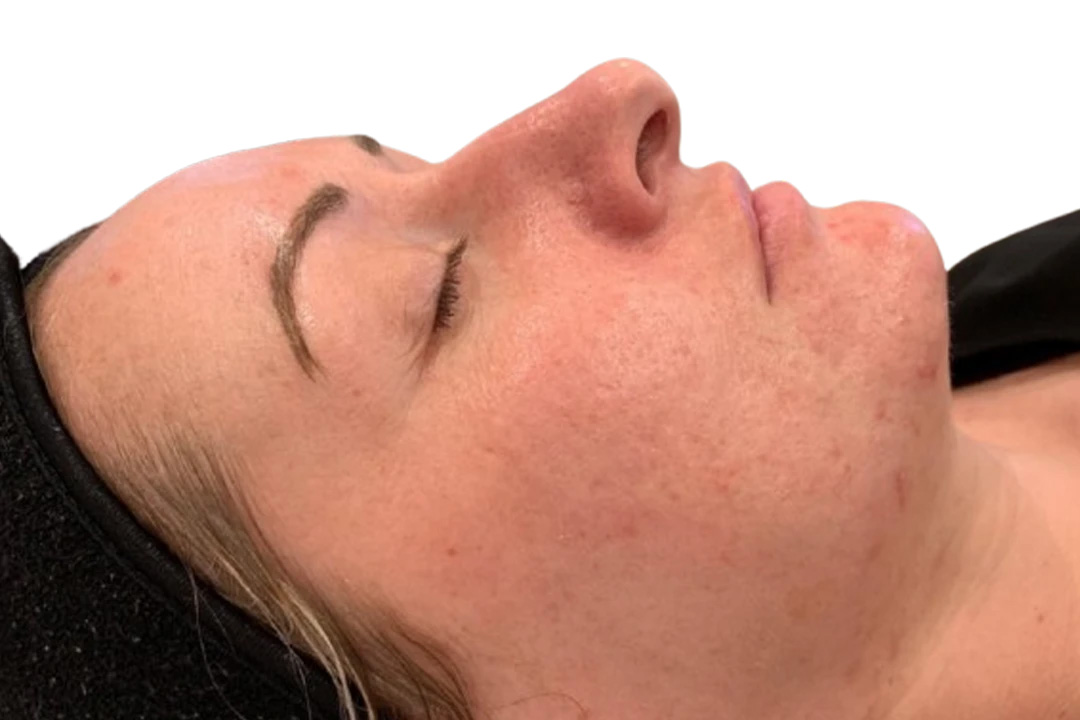
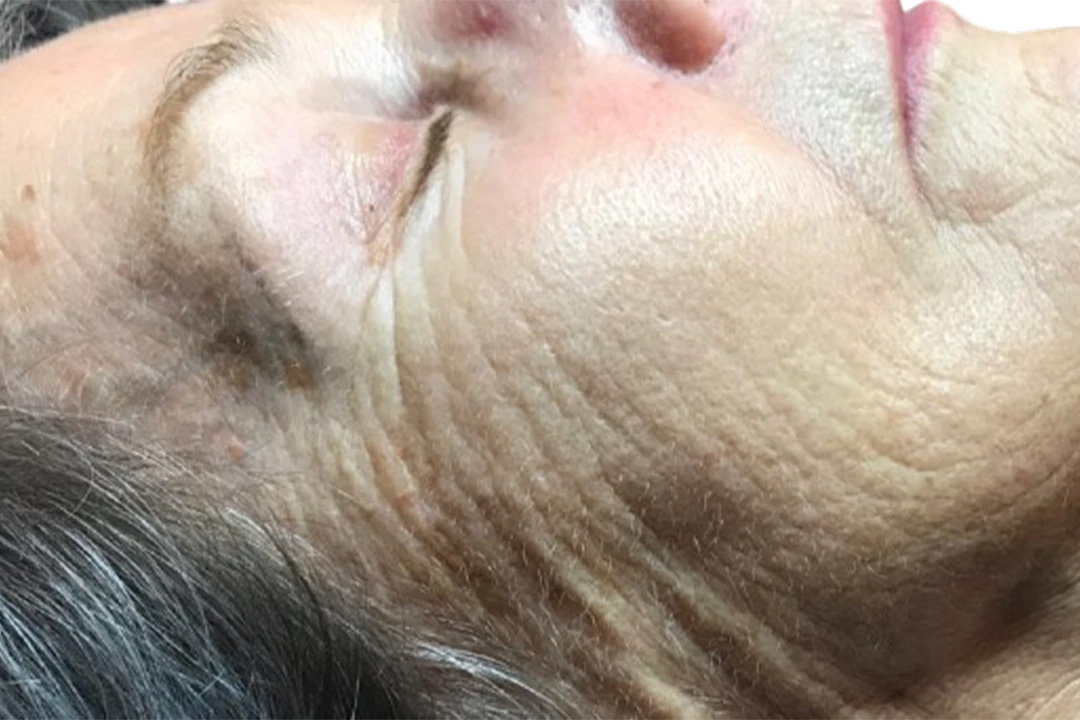
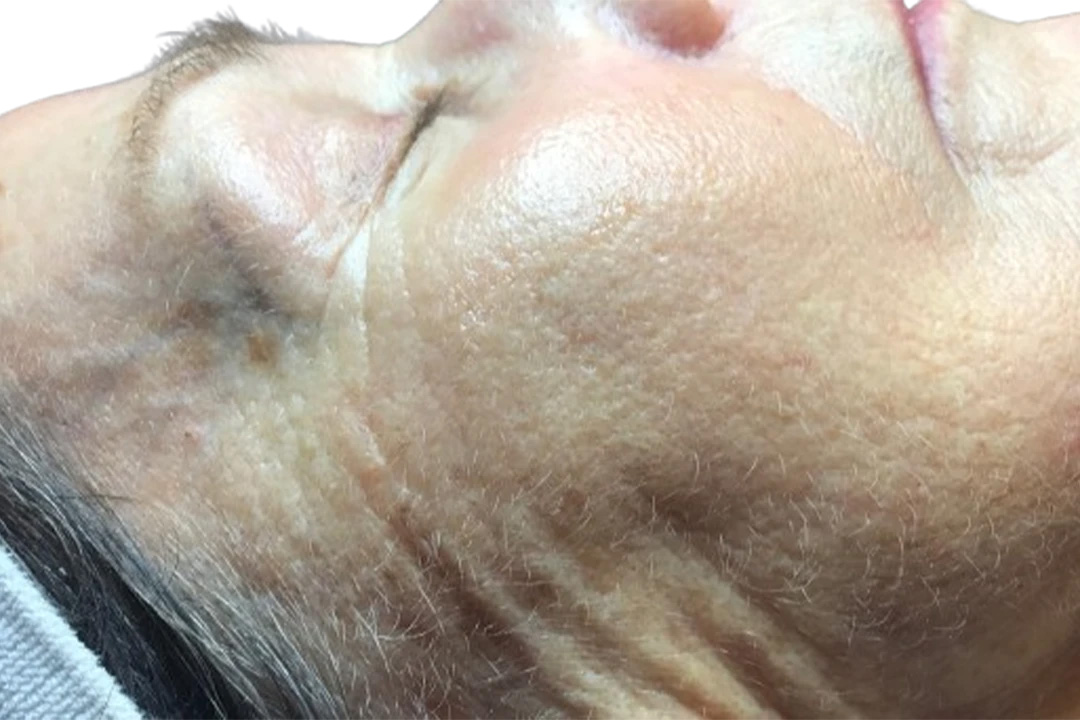
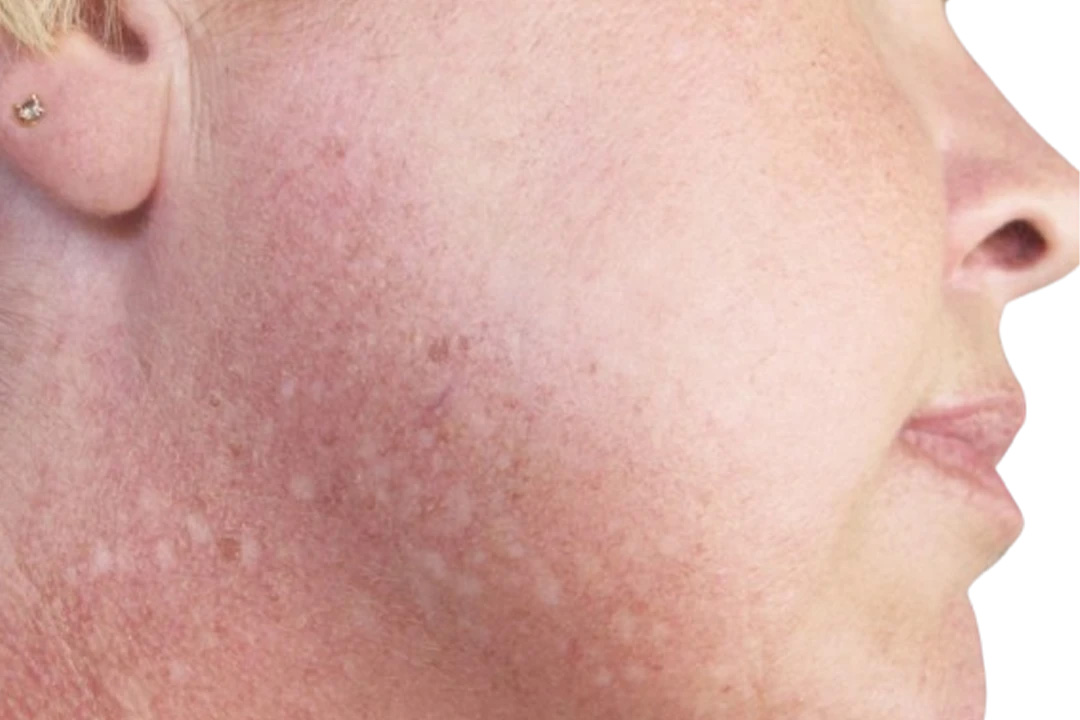
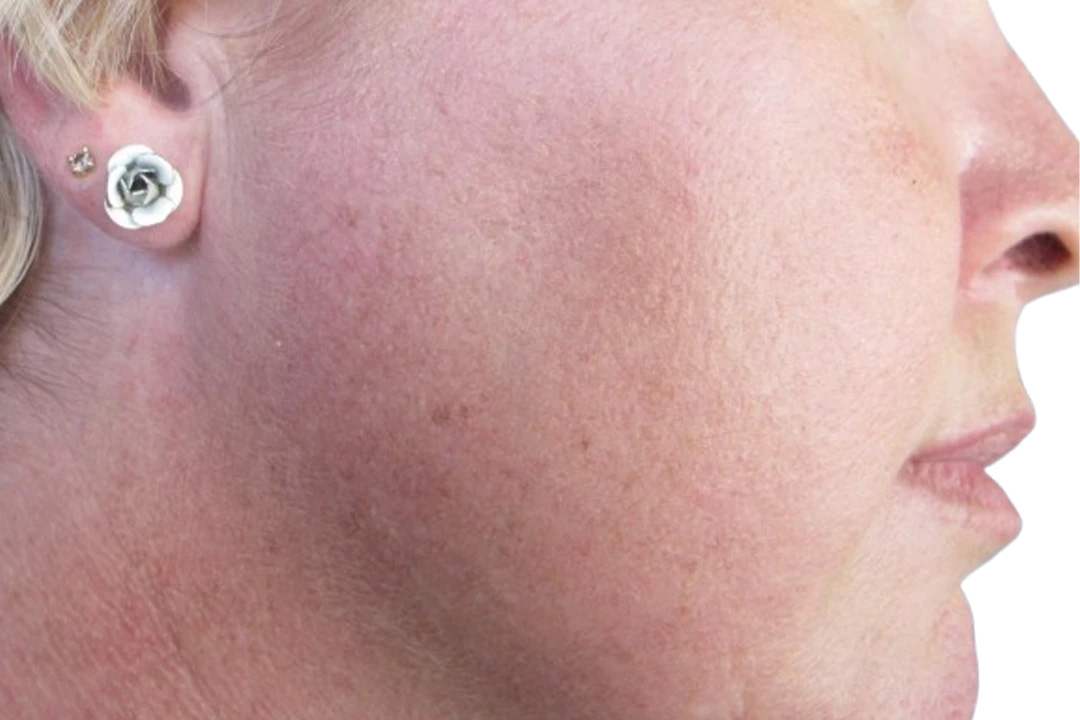
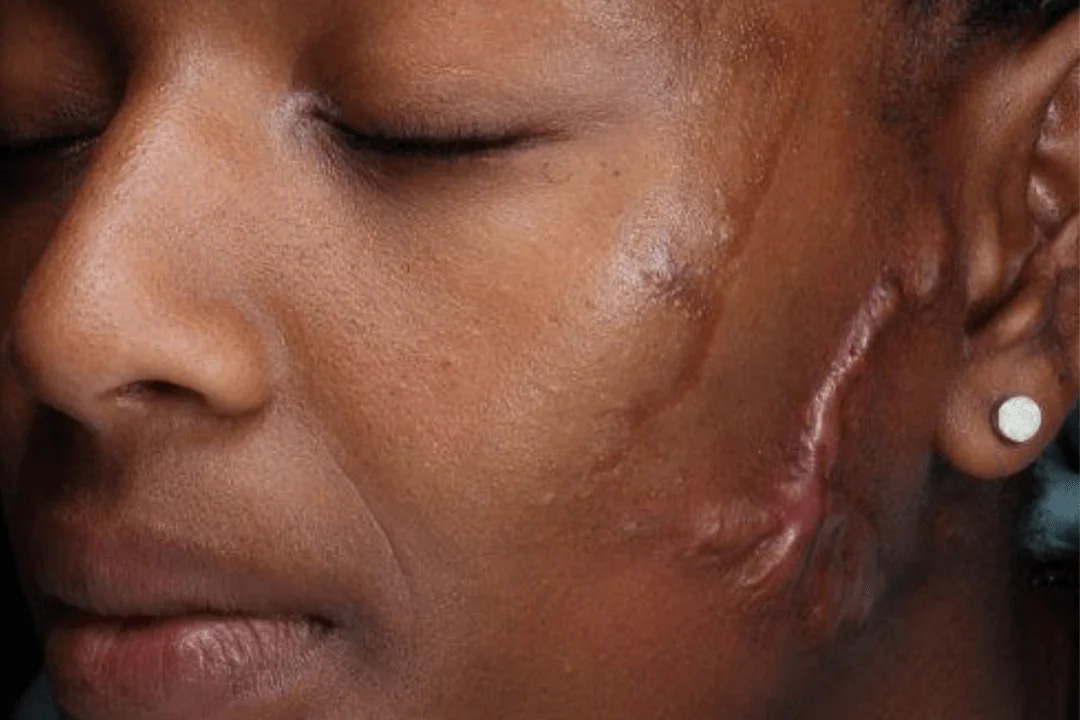
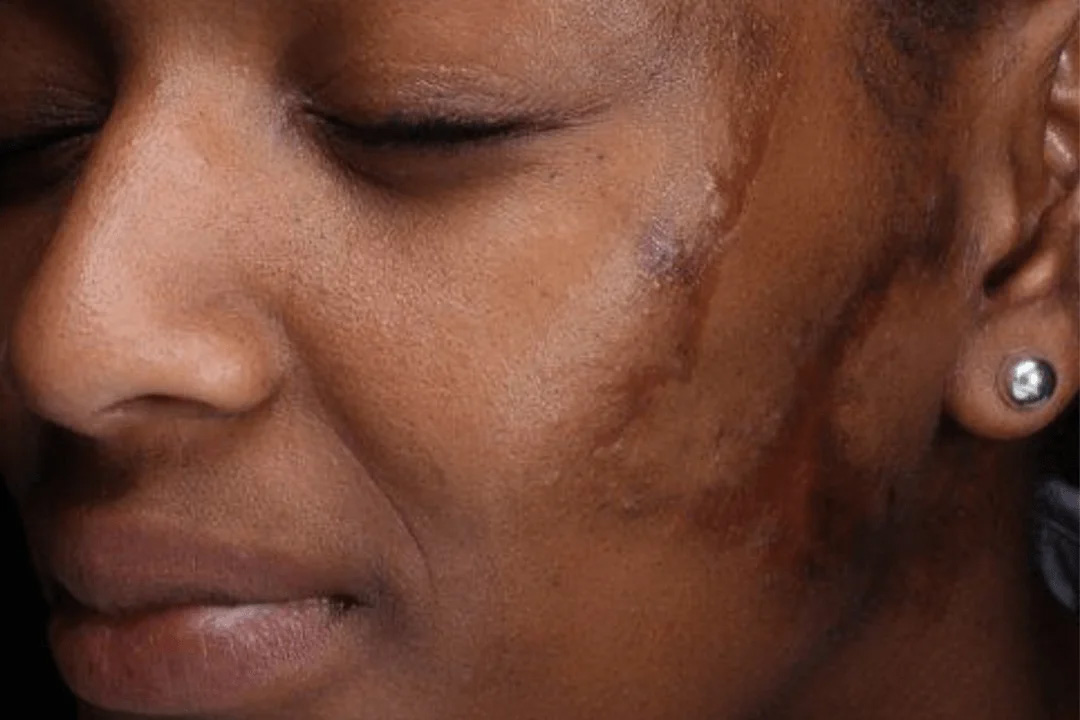
Dermapen sent us ten before-and-after pairs for the DP4, and one short product video. We publish the whole set rather than a chosen few — including the pairs showing concerns we would not reach for microneedling to treat — and under each one we have written what the two frames actually differ in, including where the lighting, the pose or a shine on the skin is doing part of the work.
Nineteen seconds of Dermapen’s product animation for the DP4: a computer-rendered turn around the handpiece and its cartridge. The file has no audio track, so if you play it and hear nothing, nothing is broken. This is promotional material the manufacturer made to sell the device — it is not a clinical demonstration, it was not filmed at this practice, and no treatment and no patient appears in it. What the device is and how we use it is written out above, which is the part that matters.
Dermapen promotional animation · supplied by the manufacturer · silent, no audio track · not filmed at this practice
-
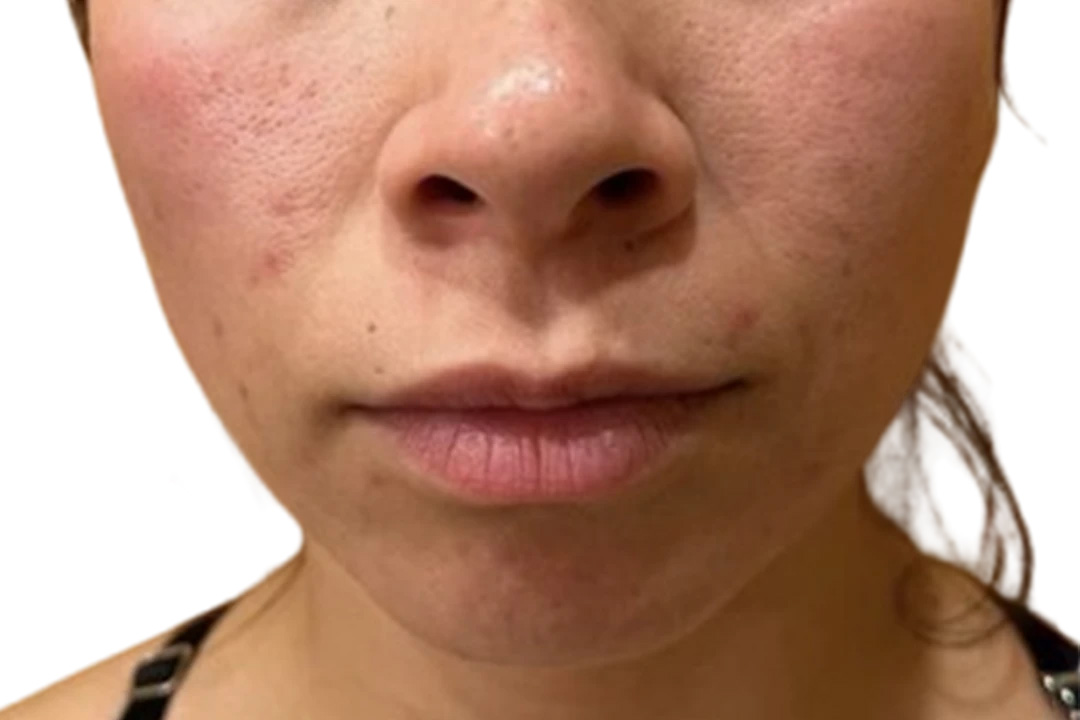
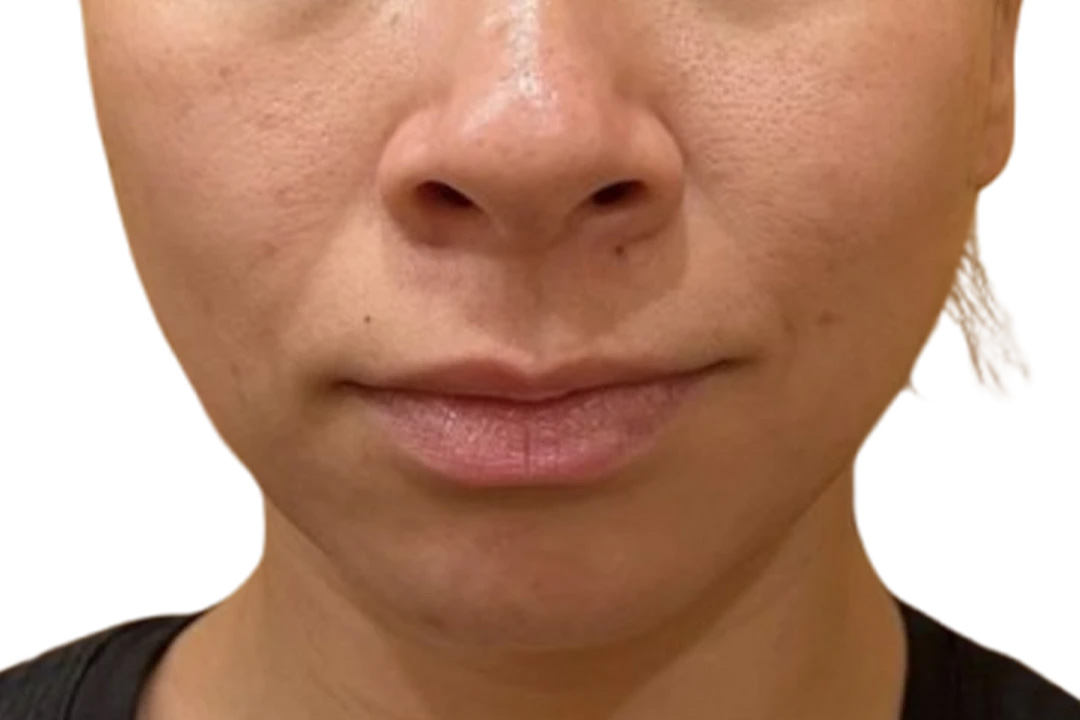
Cheek and jawline with raised bumps and the darker marks left behind by them. In the after photograph the bumps are fewer and the surface reads more even; scattered marks are still there. The headband, the hair and the lighting are not the same in the two frames, which is worth holding in mind when comparing them.
Dermapen 4 marketing photographs · supplied by the manufacturer · no clinician credited · not a patient of this practice
-
Dense fine wrinkling across the temple and upper cheek with brown spots through it. In the after photograph the fine lines are shallower and fewer; the brown spots are still present. The skin looks wet or freshly treated in the after frame, and that smooths the appearance of texture on its own.
Dermapen 4 marketing photographs · supplied by the manufacturer · no clinician credited · not a patient of this practice
-
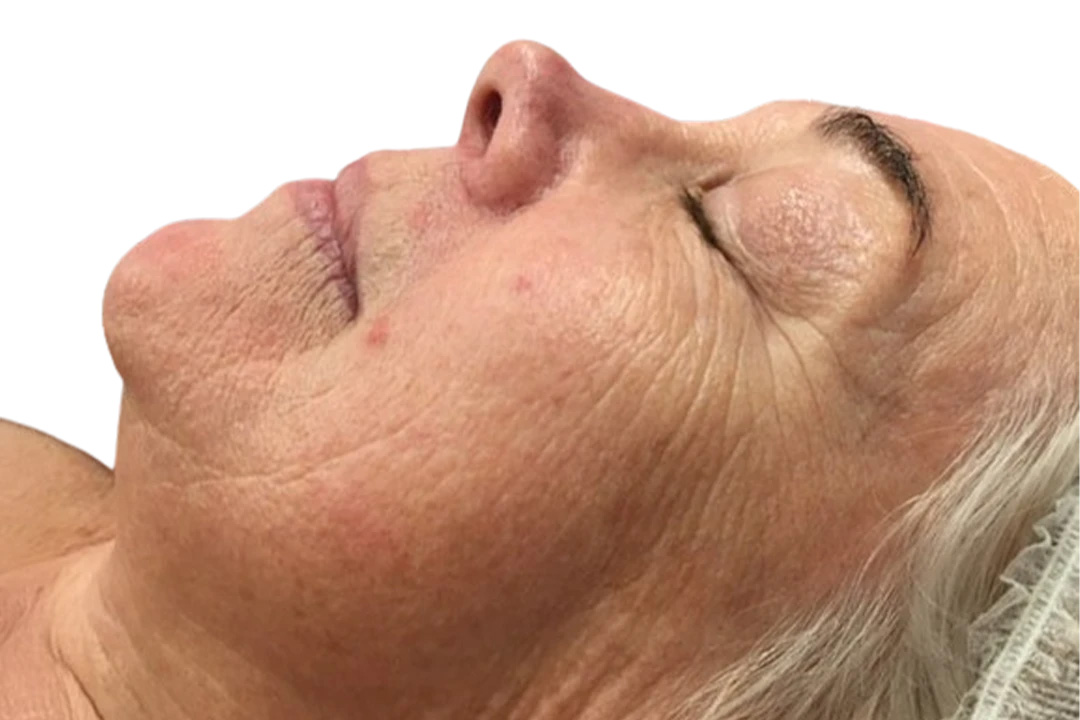
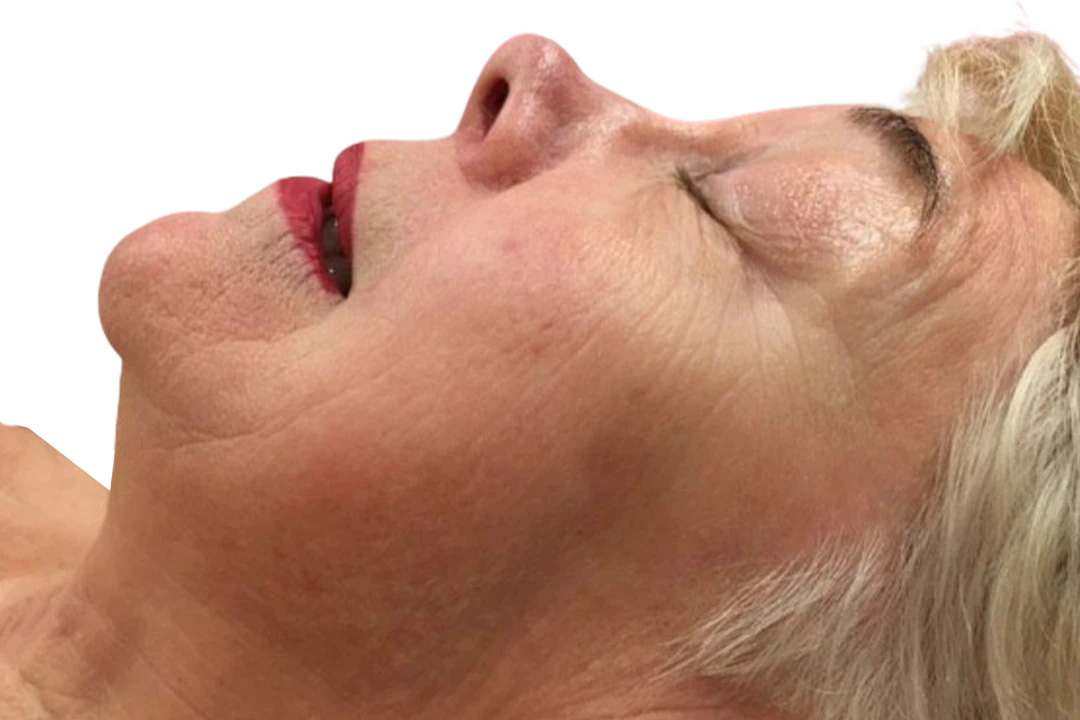
Crosshatched lines across the jaw, chin and upper neck. In the after photograph the neck skin reads smoother and the crosshatching is less defined. The head position, the make-up and the lighting all differ between the two frames, which limits how far they can be compared.
Dermapen 4 marketing photographs · supplied by the manufacturer · no clinician credited · not a patient of this practice
-
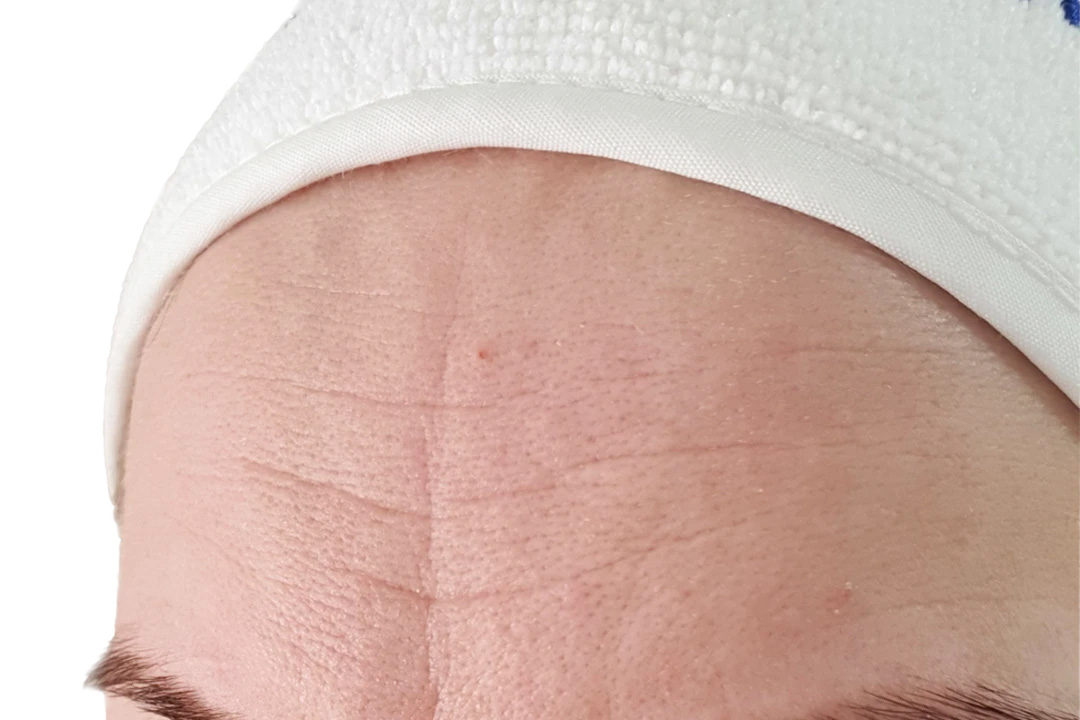
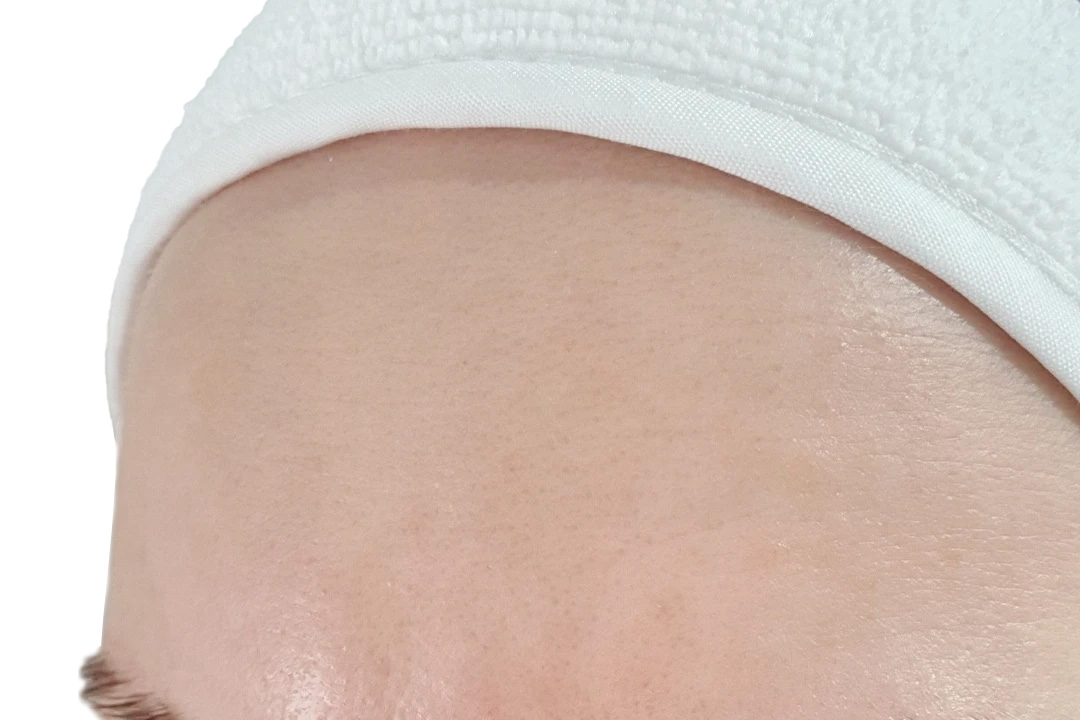
Horizontal lines across the forehead above the brow. In the after photograph they are considerably fainter and the surface texture looks smoother. The skin is also shinier in the after frame, and a shine flattens the look of lines by itself — some of the difference here is light rather than collagen.
Dermapen 4 marketing photographs · supplied by the manufacturer · no clinician credited · not a patient of this practice
-
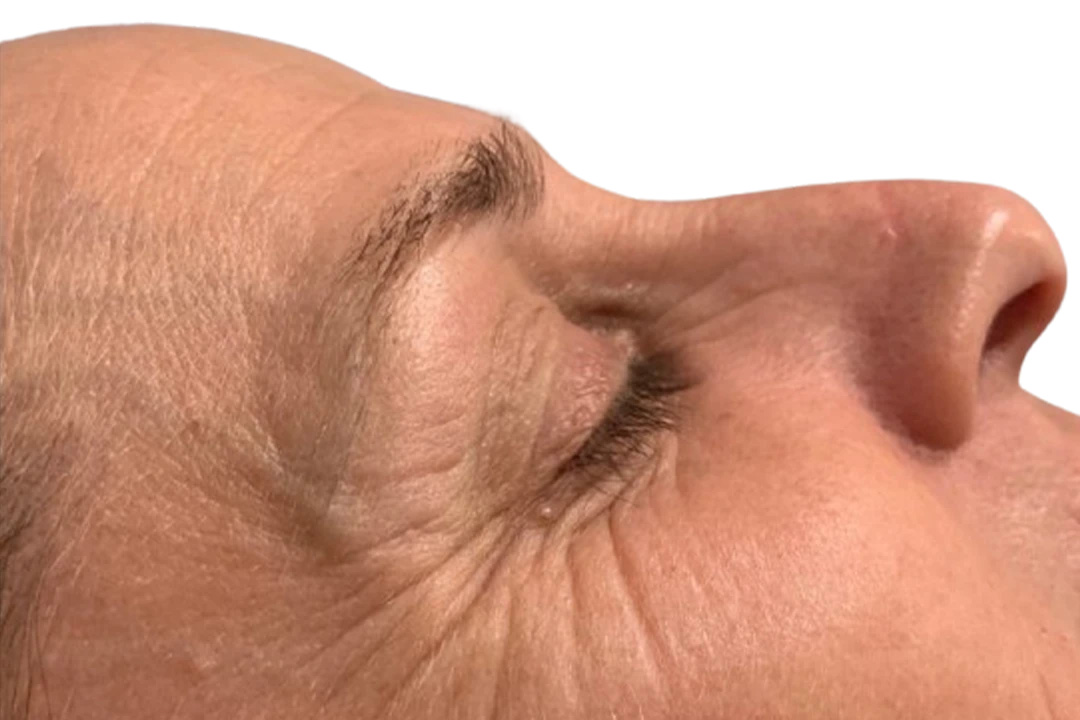
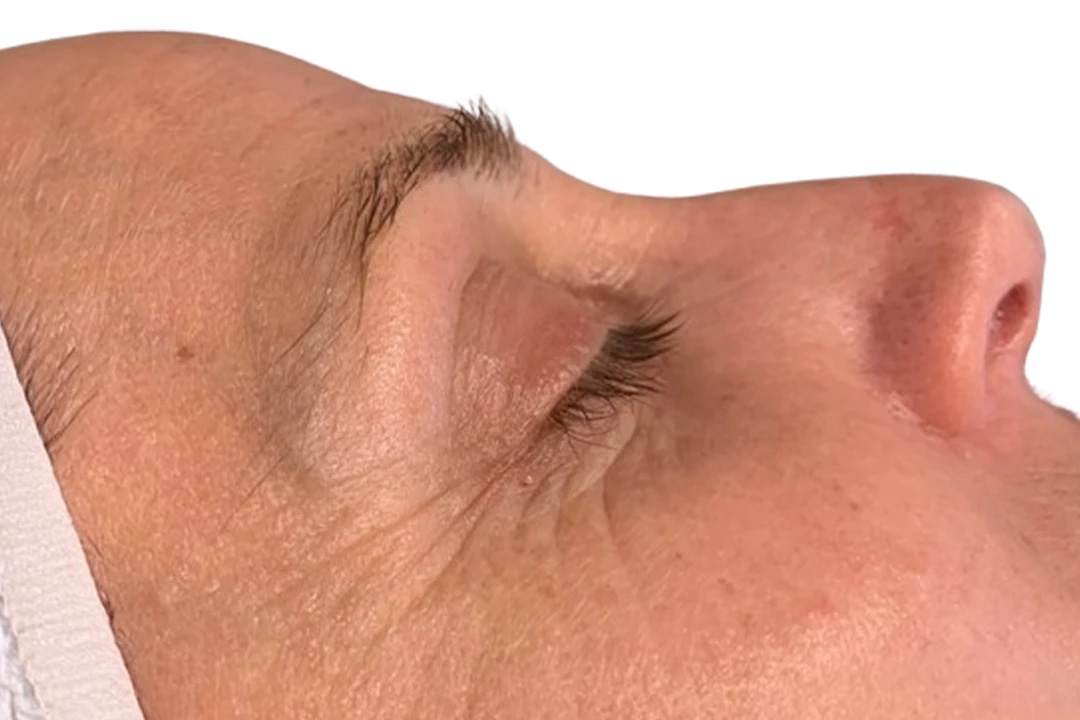
Lines fanning from the outer corner of the eye, with crepey skin across the temple. In the after photograph the fan of fine lines is shallower and less dense; the deeper crease beneath the eye is still visible. The head is turned slightly differently in the two frames.
Dermapen 4 marketing photographs · supplied by the manufacturer · no clinician credited · not a patient of this practice
-
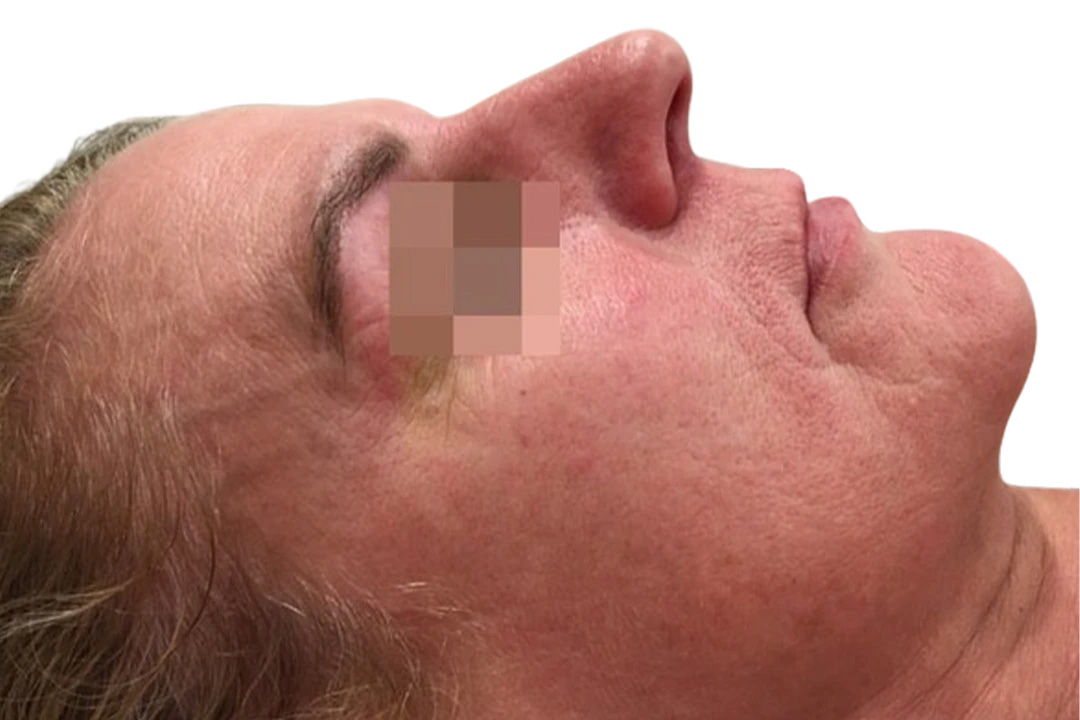
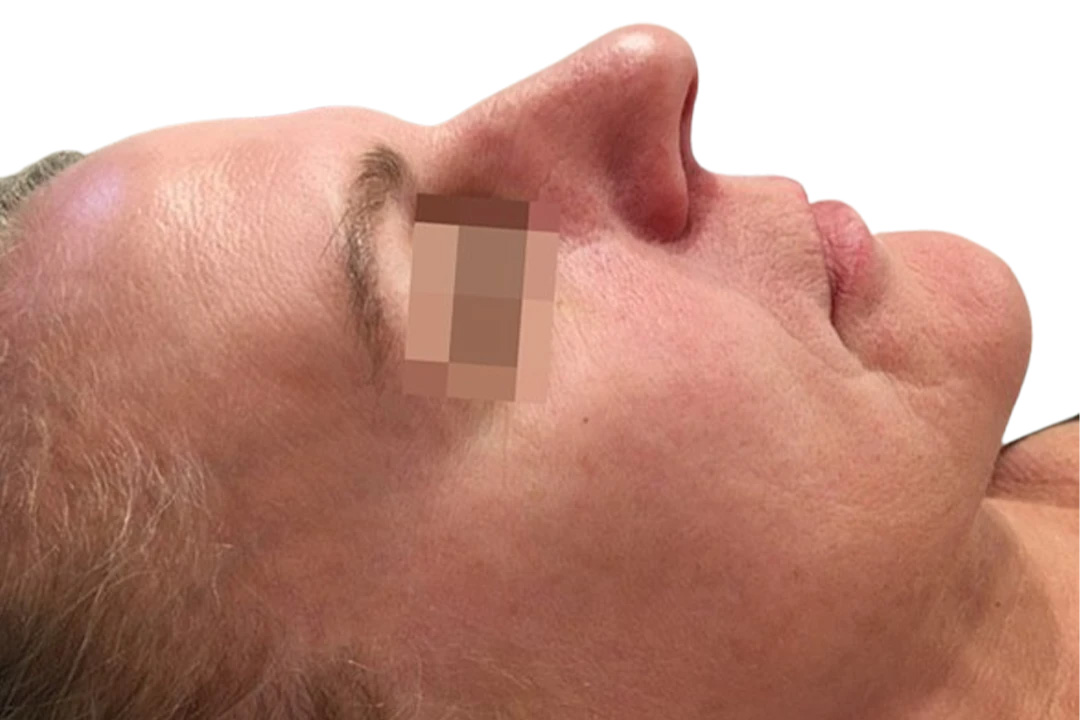
Cheek, jaw and upper neck with crepey texture and uneven colour from sun exposure. In the after photograph the surface reads smoother and the colour more even. The eyes are pixelated in both frames by the manufacturer, not by us.
Dermapen 4 marketing photographs · supplied by the manufacturer · no clinician credited · not a patient of this practice
-
A cheek and jawline carrying both small pale spots and mottled brown colour. In the after photograph the tone is more even and the pale spots are less obvious. Background redness is present in both frames, and the earring and the hair are different, so this is not a controlled pair.
Dermapen 4 marketing photographs · supplied by the manufacturer · no clinician credited · not a patient of this practice
-
A raised, rope-like scar running down the cheek in front of the ear. In the after photograph the scar sits flatter against the skin and its colour is closer to the surrounding cheek; the scar is still plainly there. We publish this pair because it is part of the set Dermapen supplied, not as an offer. Raised and keloid scarring is a relative contraindication for microneedling in many protocols — needling can prompt more scar tissue in skin that scars this way — and it is not a treatment we offer for keloid or raised scarring. A scar like this needs looking at in person by a clinician who treats them.
Dermapen 4 marketing photographs · supplied by the manufacturer · no clinician credited · not a patient of this practice
-
Redness across both cheeks with small bumps running through it, and darker marks along the chin and jaw. In the after photograph the redness is paler and the marks are fewer. Dermapen files this pair under rosacea; we route facial redness to IPL and the long-pulsed Nd:YAG rather than to needling, which is what our rosacea page says. The lighting and the angle differ between the two frames.
Dermapen 4 marketing photographs · supplied by the manufacturer · no clinician credited · not a patient of this practice
-
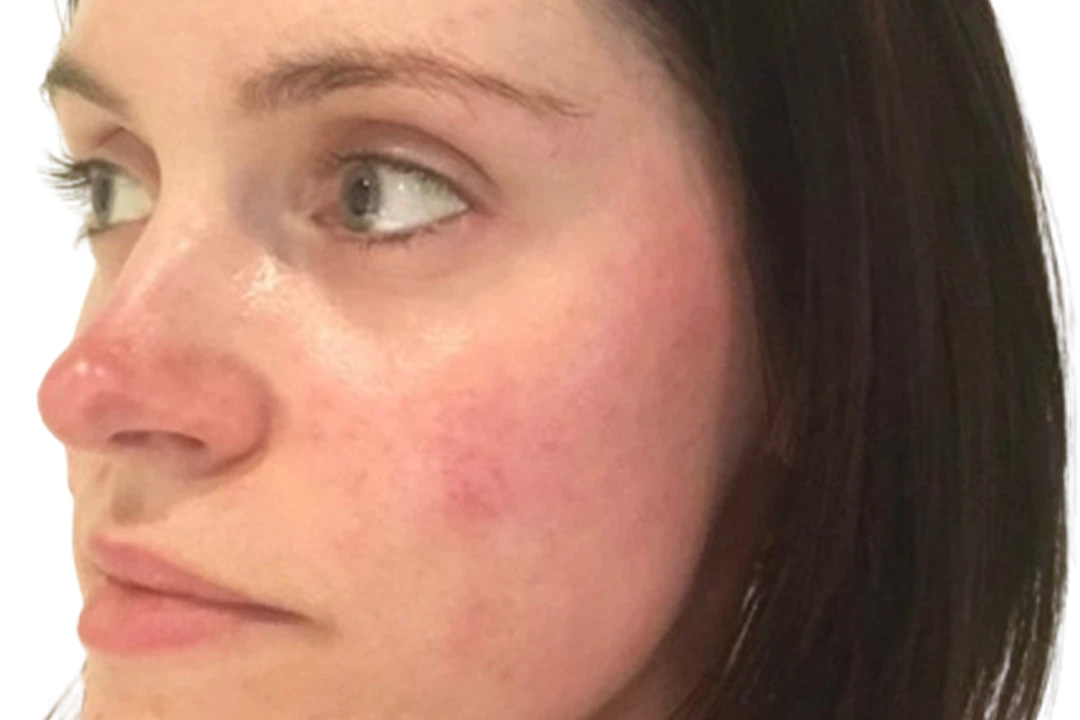
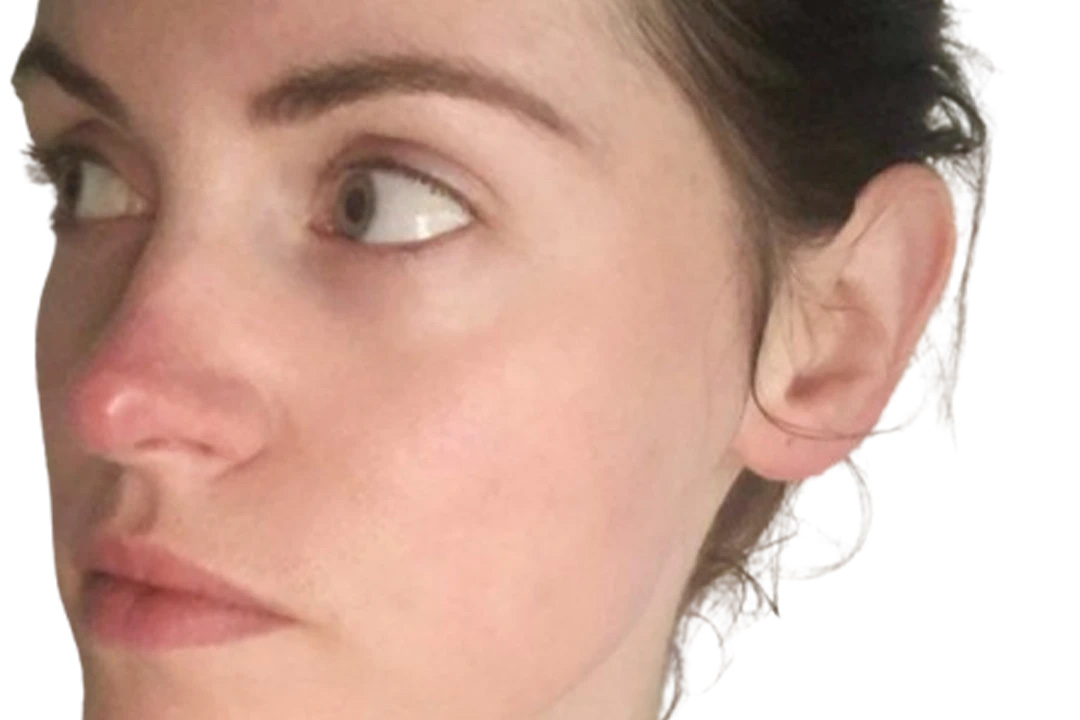
A pink flush across the cheek with a more defined red patch below the cheekbone. In the after photograph the flush is fainter and the patch is not obvious. This is the manufacturer’s second rosacea pair, and the same point applies: redness is not what we use microneedling for. The hair is pulled back and the light is cooler in the after frame, and both change how redness reads on camera.
Dermapen 4 marketing photographs · supplied by the manufacturer · no clinician credited · not a patient of this practice
Questions
What’s the difference between microneedling and RF microneedling?
Mechanical microneedling creates micro-channels; the injury itself is the stimulus. RF microneedling adds radiofrequency heat at depth through the needles, driving deeper remodeling. Mechanical suits texture, pores, tone, and shallow scars at lower cost and downtime; RF earns its price for deeper scarring and early laxity. We offer both and match the tool to the problem.
Does microneedling hurt?
With numbing cream, it’s tolerable — a vibrating, scratchy pressure, briefly sharper over bony areas. Most people talk through it.
How many sessions do I need?
Usually three, four to six weeks apart, then maintenance once or twice a year. Scarring and stretch marks run longer series. Single sessions produce real but small change — this is a cumulative treatment.
Is at-home dermarolling the same thing?
No, and we’d steer you away from it. Home devices can’t match clinical depth, pressure control, or sterility, and repeated rolling with a dulling, imperfectly cleaned tool trades a small benefit for infection and scarring risk. It’s one of the categories we’ve flagged on our skincare guidance — the savings aren’t worth what they occasionally cost.
Is PRP worth adding?
Sometimes. The mechanism is plausible and some studies show faster recovery and modestly better scar outcomes; others show no difference — the same honest grade we publish on the RF page. We’ll recommend it for scar work and skip it where it’s unlikely to change your result. How we prepare PRP matters more than whether you add it.
Two ways to book
Call us — no login needed
(757) 586-4575. Answered 24 hours a day, including evenings and Saturdays. Most people are booked in about a minute.
Book online
Pick your time on our scheduler. New patients set up a quick login at the last step — that's how you reschedule yourself later. When you're done you'll land back here on a Booking confirmed page.
Didn't reach the confirmation page? Then nothing was booked — give us a call and we'll take care of it.
Newport News · Virginia
Start with a consultation. It’s free.
Every plan here starts with a conversation. Bring your questions — we’ll give you a realistic picture of what each option can and can’t do, including when the answer is to wait or to start somewhere simpler.
Takes about a minute. You'll come back here to a confirmation page when you're booked — if you don't get there, call (757) 586-4575, any hour.