RF Microneedling · Newport News
RF microneedling in Newport News.
Radiofrequency microneedling puts a fractional pattern of thermal injury into the dermis without stripping the epidermis off to get there. That single sentence is the whole value proposition, and everything below is the detail behind it: what it actually does, where it came from, what the evidence supports and what it doesn’t, who is legally permitted to perform it in Virginia, and what you need to do before and after. It is performed here in Newport News, on Jefferson Avenue near Kiln Creek, by the provider rather than delegated.
I’ll be direct about what this treatment can and can’t do. This is not a facelift. It is not a substitute for surgery, and no amount of marketing language makes a needle array do what a scalpel does. What it is: one of the better-supported non-surgical options for atrophic acne scarring, skin texture, enlarged pores, and early laxity — with a safety profile across skin types that ablative lasers can’t match.
What it is, mechanically
A handpiece drives an array of fine needles into the skin to a set depth. Once the needles are seated, bipolar radiofrequency current passes between adjacent needle rows. Tissue resists that current, resistance generates heat, and the heat produces a discrete column of coagulation in the dermis — where collagen lives.
We have the option to use insulated or non-insulated needles. Insulated needles are sheathed along the shaft and release energy only at the distal tip, so the heat lands at one depth I choose. Non-insulated needles are active along the whole shaft, so a single pass heats a column of tissue running from just below the surface down to the tip. I choose between them for the target depth and the area being treated — not because one of them is the safer needle. There are no head-to-head clinical trials comparing the two needle types in patients, and the one direct histologic comparison found that non-insulated electrodes produce discrete columns of dermal coagulation comparable to insulated designs, without meaningful epidermal injury. They are different tools for different depths, and I’ll tell you which one I’m using on you and why.
Three things follow from that design.
The energy is deposited at depth, not at the surface. The current is carried into the dermis by the needle rather than driven down through the epidermis from above. With insulated needles the epidermis is spared except for the microchannel the needle made passing through; with non-insulated needles the heated column begins just below the surface and runs to the tip. Compare either to ablative resurfacing, which removes the epidermis by design.
The injury is fractional. Columns of coagulated tissue sit inside a field of untreated tissue. Untreated tissue is the reservoir of keratinocytes and fibroblasts that repopulates the injured columns. Small wounds surrounded by healthy tissue close fast. That’s why a treatment that produces measurable dermal remodeling costs you a weekend instead of two weeks.
The chromophore problem disappears. Lasers work by putting a specific wavelength into a specific target — melanin, hemoglobin, water. In darker skin, epidermal melanin competes for that energy, which is the mechanism behind post-inflammatory hyperpigmentation after laser resurfacing. RF doesn’t care about melanin. Current follows tissue impedance, not pigment. This is the single most important practical advantage of the modality and the reason it is my default recommendation for textural work in Fitzpatrick IV–VI.
The healing response is the actual treatment. Coagulated collagen contracts immediately — that’s the transient tightening people notice in the first week and then watch fade. The durable change is neocollagenesis and neoelastogenesis over the following 8–12 weeks as the wound-healing cascade lays down and remodels new dermal matrix. This is why I schedule follow-up photography at three months, not at three weeks. Judging this treatment at two weeks is judging inflammation, not result.
Where the technique came from
Needling the skin to make it repair itself is old, and the through-line is worth knowing because it tells you which parts of the current marketing are new science and which parts are new packaging.
1995 — Subcision
Orentreich and Orentreich published subcutaneous incisionless surgery: a needle passed under a bound-down scar to release the tethering fibers and provoke new collagen in the space. The insight was that controlled needle trauma is a therapeutic tool, not just a delivery route. (Dermatol Surg. 1995;21(6):543–9.)
1997 — Needle dermabrasion
Camirand and Doucet reported using a tattoo gun, without ink, to treat scars. Crude, and it worked. (Aesthetic Plast Surg. 1997;21(1):48–51.)
2005–2008 — Percutaneous collagen induction
Des Fernandes formalized the technique with a hand roller and published the histology showing collagen deposition and epidermal thickening without the pigment complications of ablative resurfacing. Aust and Fernandes’ 2008 series is the paper that moved microneedling from curiosity to accepted practice. (Plast Reconstr Surg. 2008;121(4):1421–9.)
2002–2008 — Radiofrequency arrives separately
Monopolar RF devices were cleared for periorbital rhytides in the early 2000s. These heated tissue in bulk from the surface, which meant the epidermis had to be aggressively cooled to protect it, and the therapeutic window between “no effect” and “fat atrophy” was narrow. The complication reports from that era are why some patients still flinch at the phrase “RF tightening.”
2009 — Fractionation solves the RF problem
Hantash and colleagues demonstrated that bipolar fractional RF produced discrete columns of dermal coagulation with measurable neoelastogenesis and neocollagenesis, sparing the tissue between columns. (Lasers Surg Med. 2009;41(1):1–9.)
2012–2015 — The two lines converge
Combining a needle array with bipolar fractional RF let clinicians place the energy at a chosen depth rather than driving it through the surface. Cho et al. reported efficacy for acne scars and large pores; Chandrashekar et al. published on atrophic scarring; Min et al. compared microneedle RF to non-needle bipolar RF and found the needle-delivered energy superior. (Dermatol Surg. 2012;38(7 Pt 1):1017–24; J Cutan Aesthet Surg. 2014;7(2):93–7; Arch Dermatol Res. 2015;307(10):897–904.)
Everything since — every branded device with a new name — is refinement of that 2012 architecture: needle count, insulation, depth control, pulse duration, temperature feedback. Real engineering improvements, not new biology. If a device is described as categorically different from the rest, those five variables are where the difference would actually show.
What the evidence actually supports
I grade this honestly, because the gap between what’s proven and what’s advertised is where expectations go wrong.
Well supported
Atrophic acne scarring — rolling and boxcar subtypes respond best, ice-pick worst. Multiple controlled trials, split-face comparisons against fractional ablative lasers showing comparable scar improvement with meaningfully less downtime and less post-inflammatory hyperpigmentation. Skin texture and enlarged pore appearance. Dermal thickening on histology. These are the indications I’ll recommend without qualification.
Moderately supported
Fine lines and early rhytides. Mild-to-moderate laxity of the lower face and neck — real, measurable, and modest. Striae. Surgical and traumatic scar revision. Axillary hyperhidrosis with deep-depth protocols. Expect improvement, not resolution.
Weakly supported or unsupported
Cellulite. Body contouring or fat reduction. Significant jowl or submental laxity — a needle array will not lift a defined jowl, and a surgical consult is the honest referral. Melasma, where RF microneedling has been tried and the results are inconsistent enough that I don’t offer it for that indication. “Non-surgical facelift” is a marketing phrase, not a clinical one.
Combination with PRP
Applied topically after treatment, platelet-rich plasma has a plausible mechanism — open microchannels, growth factor delivery — and a literature that is mixed, small, and inconsistently controlled. Some studies show accelerated recovery and modestly better scar scores; others show no difference beyond the microneedling itself. I offer it, I price it separately, and I’ll tell you at consultation that the evidence is suggestive rather than settled.
On off-label use
The PiXel8-RF is FDA-cleared for electrocoagulation, hemostasis, and the percutaneous treatment of wrinkles. Treating acne scarring with it is off-label — as it is with essentially every RF microneedling platform on the U.S. market. Off-label is not improper; it’s the ordinary practice of medicine, and in this case the mechanism and the published evidence both support it. I’m telling you because knowing which of your treatments are on-label and which aren’t is part of agreeing to them.
Non-invasive skin tightening: what’s realistic
“Skin tightening” covers a wide range of promises, so here’s the honest version of where RF microneedling sits among non-invasive skin tightening treatments.
Skin laxity runs on a spectrum. At one end: early softening — skin that’s lost some snap, fine crepiness, the first blur of the jawline. This is where RF microneedling legitimately earns results, because its heat remodels the collagen layer the laxity lives in. In the middle: moderate laxity, where RF microneedling still helps but expectations need shrinking to match the tool. At the far end: true jowls, heavy neck laxity, skin that’s outrun its scaffolding — no energy device tightens that to satisfaction, ours included, and the honest referral is a surgical consult.
A useful self-test: stand at a mirror and gently lift the loose area with two fingertips. If a millimeter or two of lift is what you’re after, energy-based tightening is playing in your range. If you’re lifting a centimeter to find the face you miss, you’re describing what surgery does — and I’d rather tell you that at a consult than after three sessions.
RF microneedling before and after: week by week
What the before-and-after actually looks like between the photos nobody posts:
- Day 0–2: red and mildly swollen — a weekend-sunburn look. This is the treatment working, not a complication.
- Day 3–5: faint sandpaper texture and micro-crusting as channels close. Makeup is reasonable from 24 hours.
- Week 2: skin looks normal; a modest early “glow” from swelling and epidermal turnover. Enjoy it, but don’t grade the treatment on it.
- Weeks 4–12: the real remodeling — new collagen laid down where the thermal columns were. Texture, scars, and firmness improve gradually.
- Month 3: judgment day. We compare standardized photos — same angle, lighting, distance — against baseline, because a 25–50% scar improvement is easy to feel and easy to forget without the receipts.
Two PiXel8-RF pairs, from the manufacturer
-
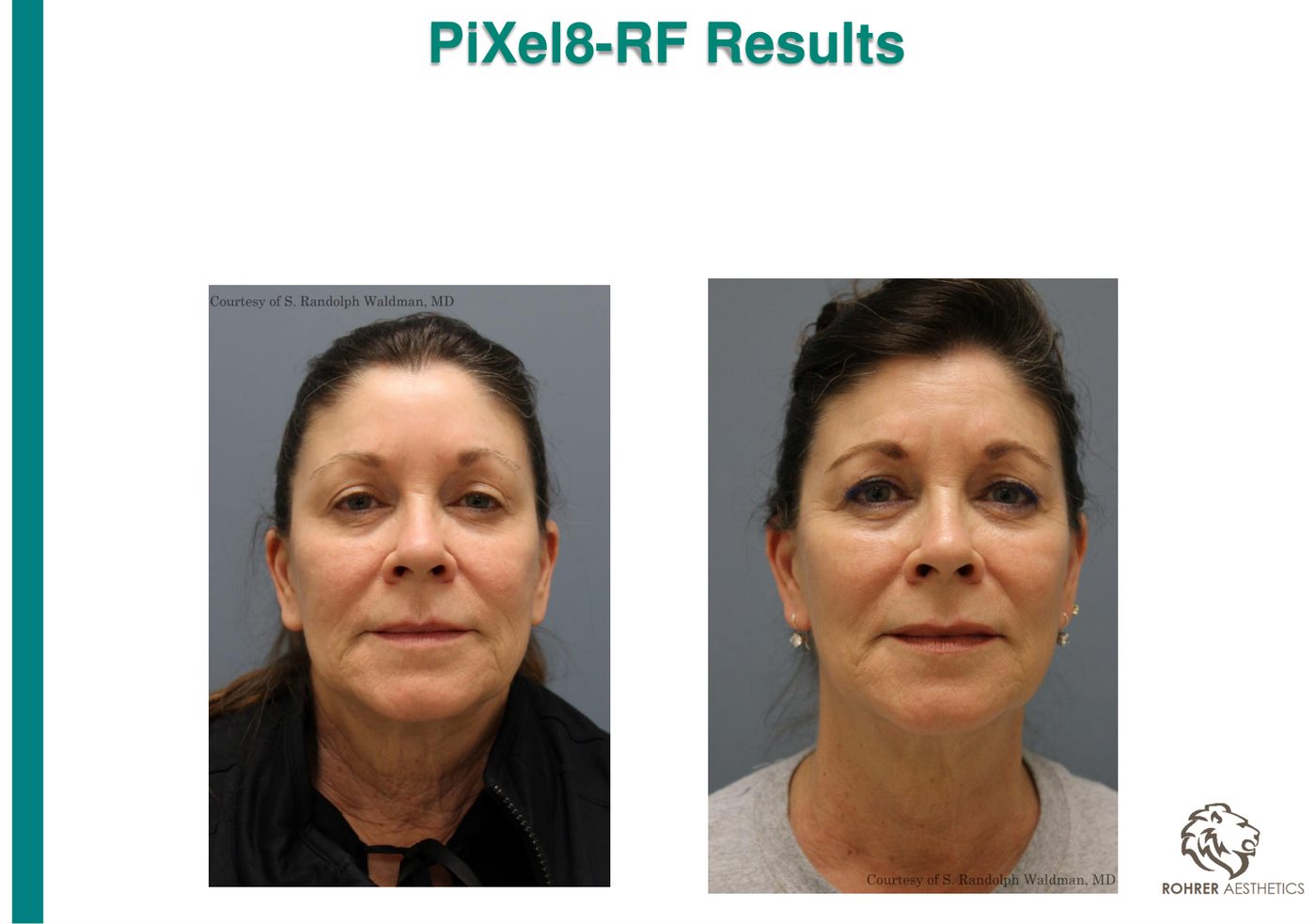
Face and neck, photographed front-on. The after frame shows a more defined jawline and less loose skin under the chin. Hair, clothing and lighting are not the same in the two frames, which is worth keeping in mind when comparing them.
Rohrer Aesthetics slide · courtesy of S. Randolph Waldman, MD · not a patient of this practice
-
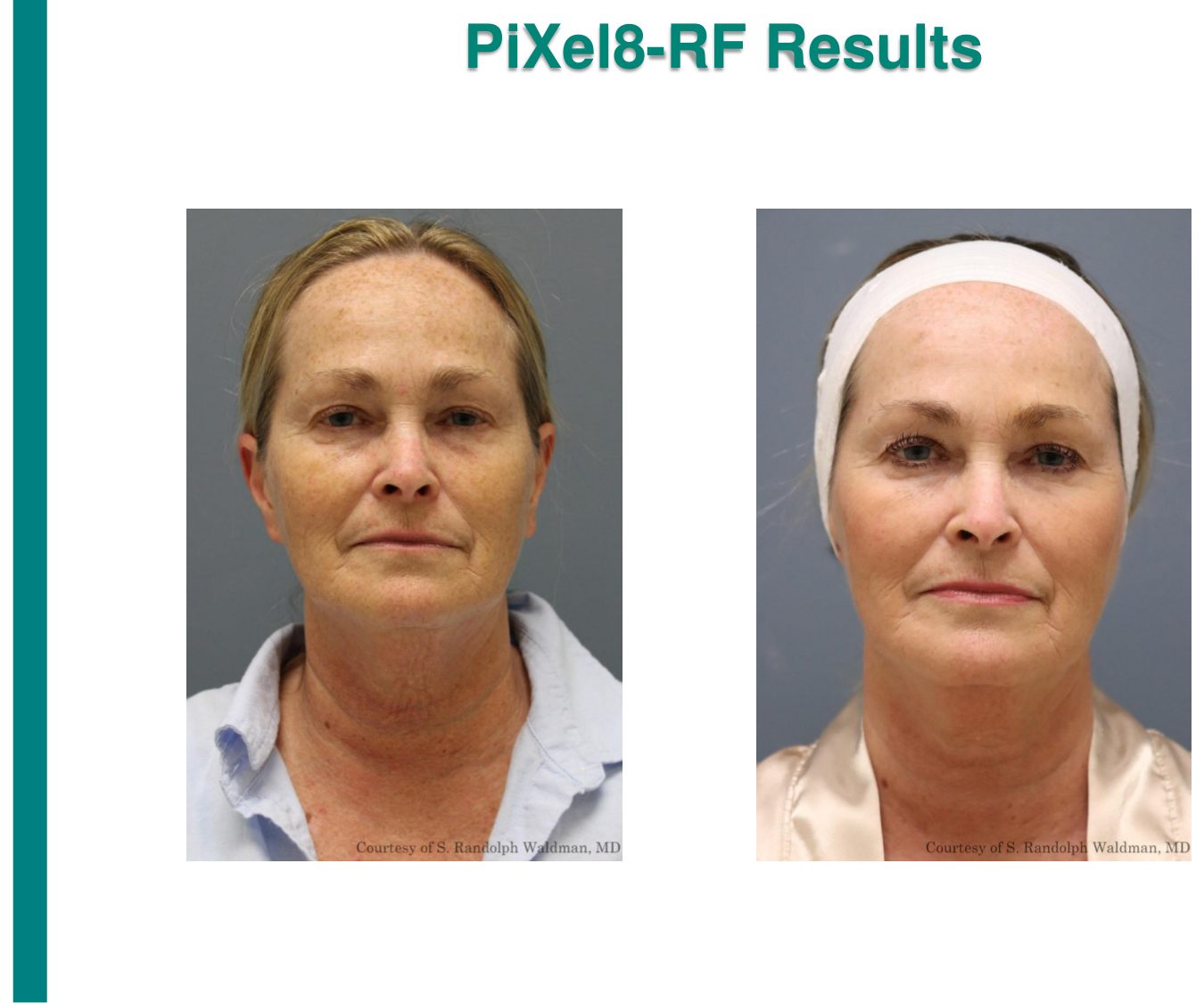
Face and neck. The after frame shows more even tone across the cheeks and a smoother neck. The subject is wearing a headband and different clothing, and the lighting differs between frames.
Rohrer Aesthetics slide · courtesy of S. Randolph Waldman, MD · the manufacturer’s logo is outside the crop on this slide · not a patient of this practice
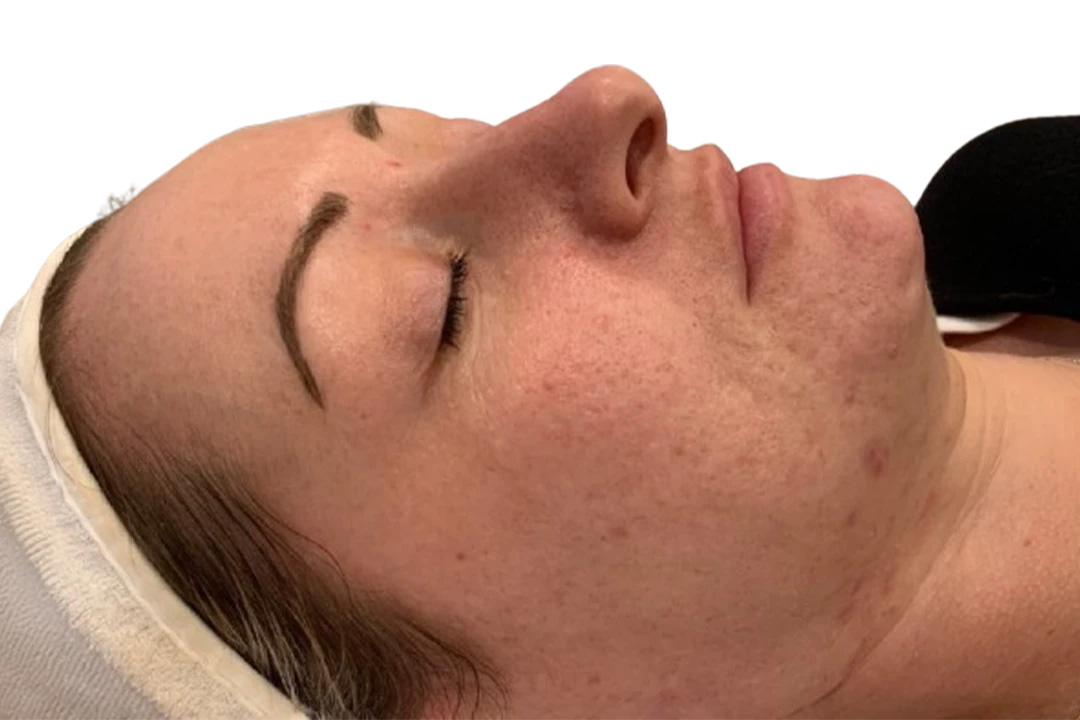
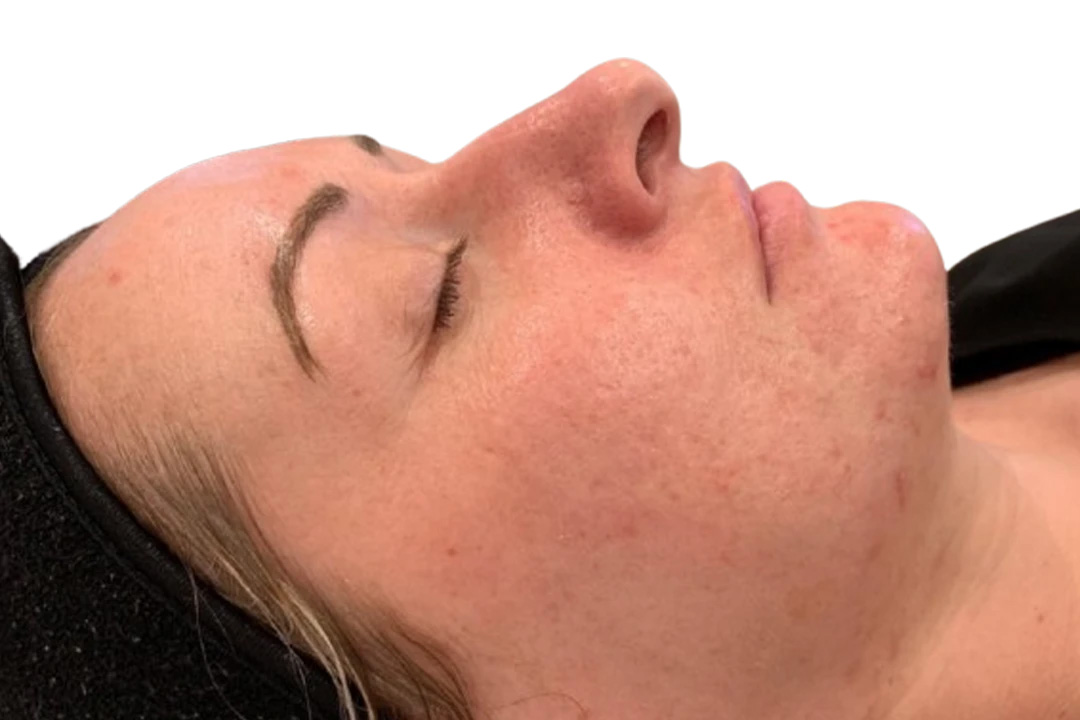
The photographs below are Dermapen 4, not PiXel8-RF
-
Cheek and jawline with raised bumps and the darker marks left behind by them. In the after photograph the bumps are fewer and the surface reads more even; scattered marks are still there. The headband, the hair and the lighting are not the same in the two frames, which is worth holding in mind when comparing them.
Dermapen 4 mechanical microneedling · not a PiXel8-RF result · manufacturer photographs · no clinician credited · not a patient of this practice
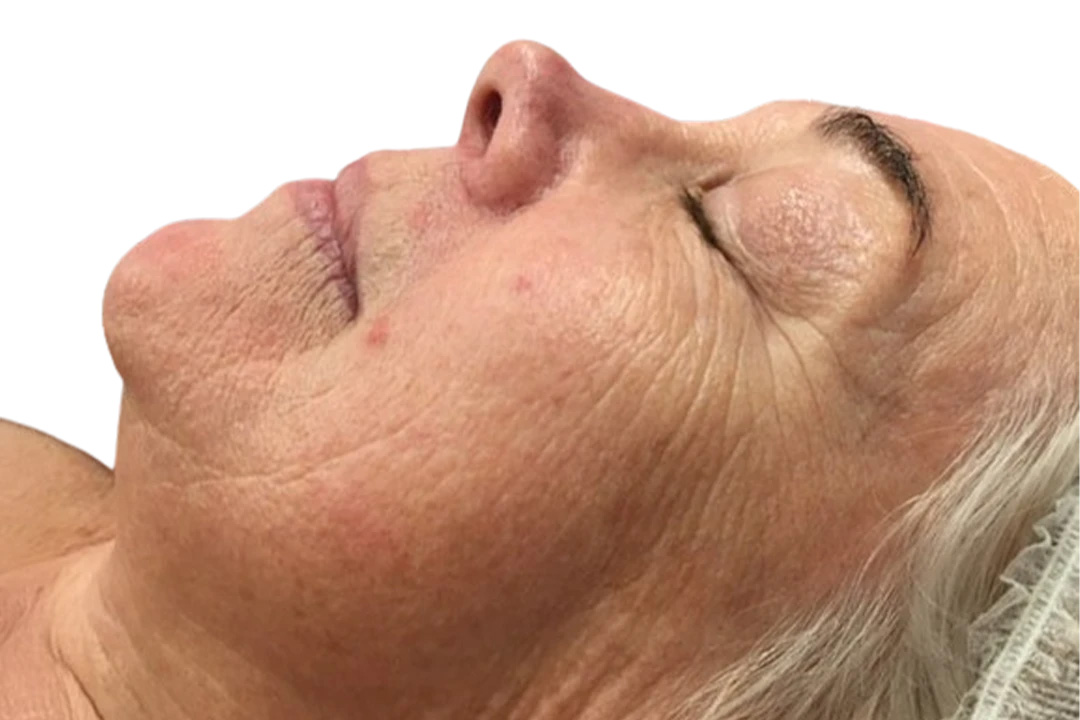
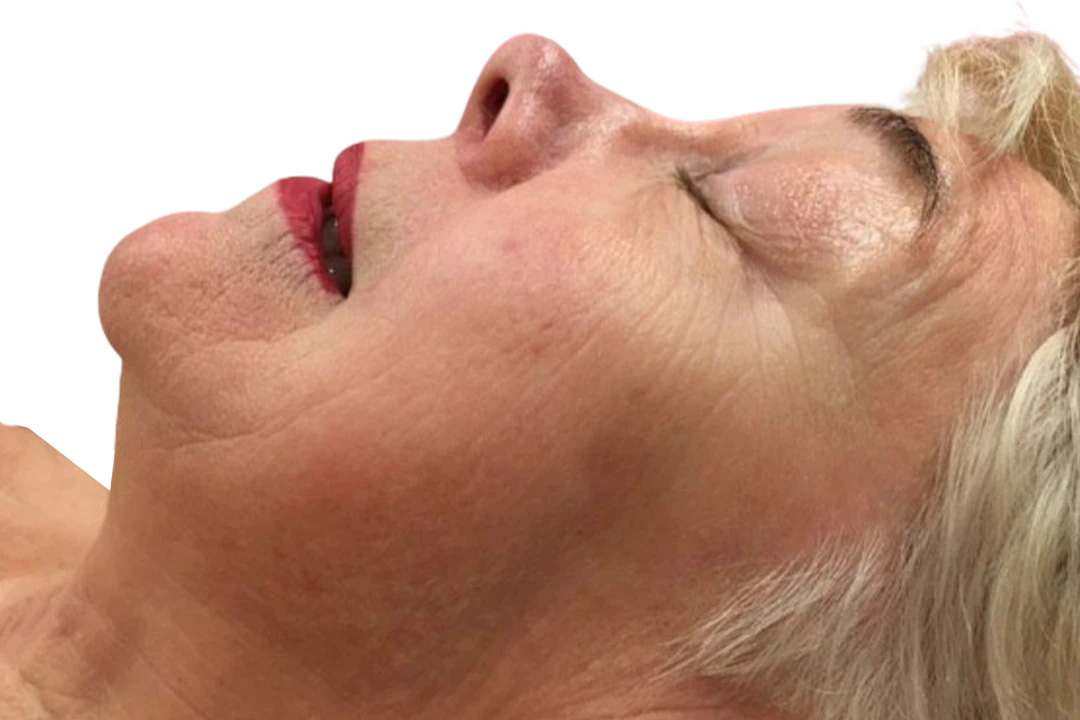
-
Crosshatched lines across the jaw, chin and upper neck. In the after photograph the neck skin reads smoother and the crosshatching is less defined. The head position, the make-up and the lighting all differ between the two frames, which limits how far they can be compared.
Dermapen 4 mechanical microneedling · not a PiXel8-RF result · manufacturer photographs · no clinician credited · not a patient of this practice
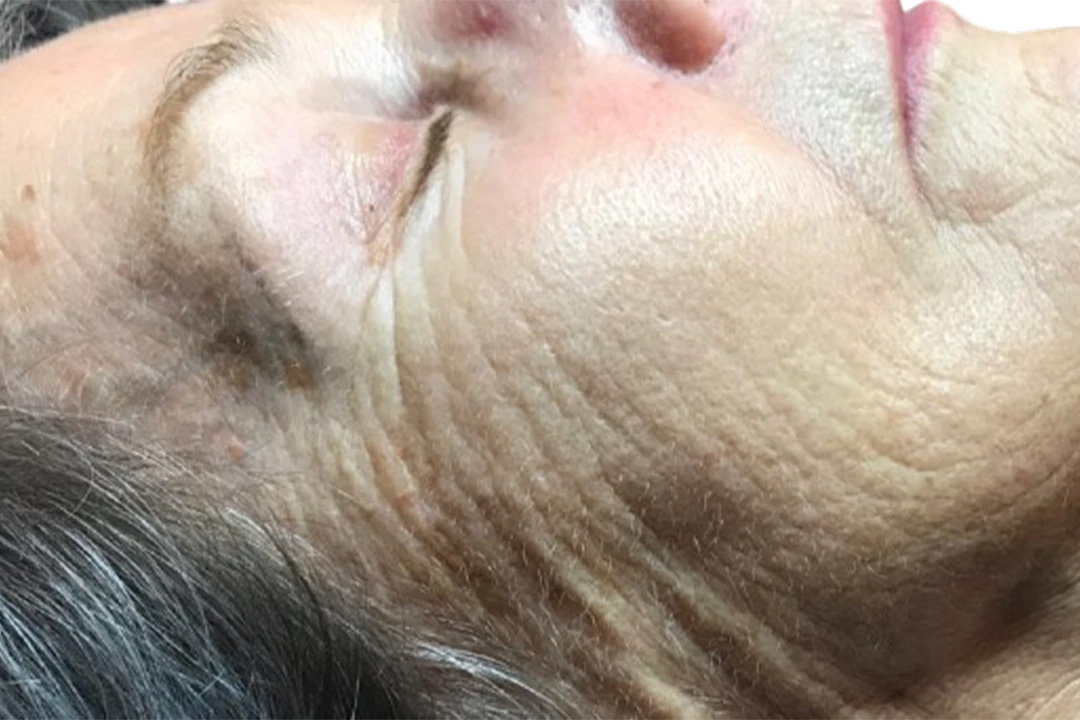
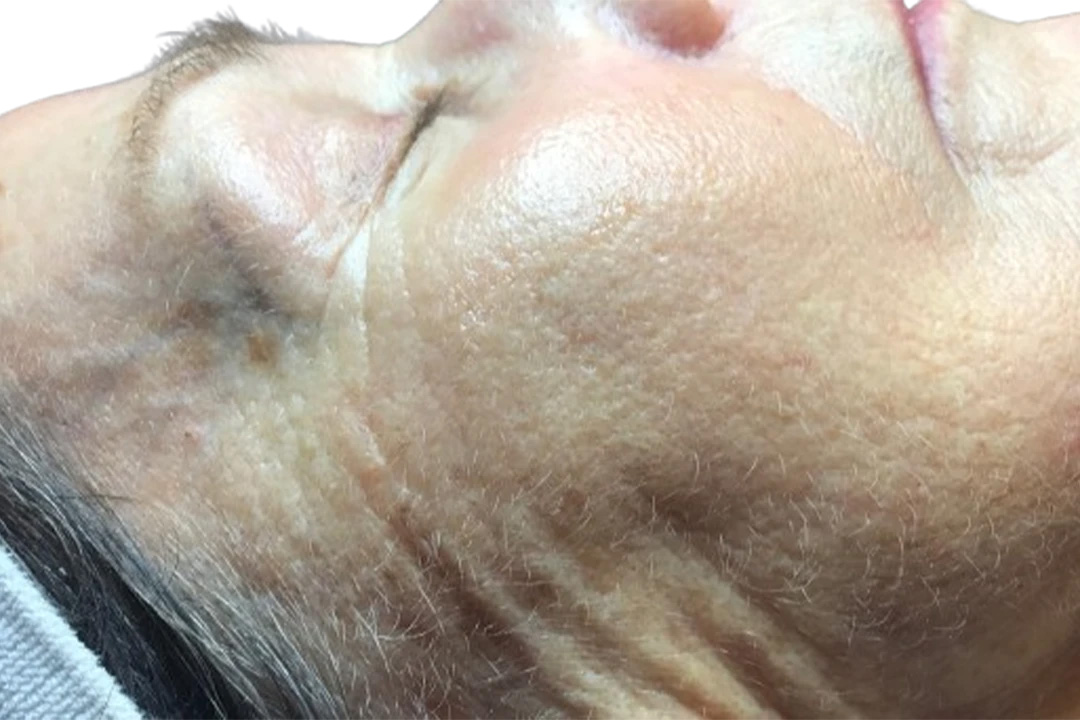
-
Dense fine wrinkling across the temple and upper cheek with brown spots through it. In the after photograph the fine lines are shallower and fewer; the brown spots are still present. The skin looks wet or freshly treated in the after frame, and that smooths the appearance of texture on its own.
Dermapen 4 mechanical microneedling · not a PiXel8-RF result · manufacturer photographs · no clinician credited · not a patient of this practice
Who is legally allowed to perform this in Virginia
This section exists because it’s the most consequential thing to check before booking, and it’s rarely spelled out anywhere.
Microneedling is outside the scope of every DPOR beauty license in Virginia. The Board for Barbers and Cosmetology issued a guidance document on May 7, 2018 interpreting Code of Virginia § 54.1-700 et seq. Its language on this point is unambiguous: microneedling, defined as the use of needles designed to pierce the skin for the purpose of collagen production or cellular renewal, is beyond the scope of licensure and should not be performed by a licensee of the Board.
Note what the guidance does not say. It does not set a depth threshold. There is no “under 1.5 mm is epidermal so it’s esthetics” carve-out in Virginia, and no master esthetician exception — the Board considered master estheticians in the same document and expanded their scope for chemical exfoliation while leaving microneedling out entirely. If a Virginia spa tells you their master esthetician can microneedle because they stay shallow, that is the most common scope error in this market, and it is wrong. RF microneedling is further outside that scope, because it adds delivery of a thermal energy device to a procedure that was already excluded.
The device itself is prescription-restricted. Federal law restricts sale of the PiXel8-RF to, or on the order of, a physician or a practitioner licensed by state law to use or order the use of the device (21 CFR 801.109). A vendor certificate is not a license and does not create authority to operate a prescription device.
Who that leaves. Physicians, physician assistants, and nurse practitioners may perform it within their own scope. I hold an autonomous nurse practitioner license in Virginia (Code of Virginia § 54.1-2957), which means I evaluate, diagnose, set the treatment plan, and treat without a supervising physician.
Virginia law also permits a licensed registered nurse to perform the procedure as a delegated task, following an examination and treatment plan set by the prescribing clinician. That’s an ordinary and appropriate staffing model, and many well-run medical aesthetic practices use it. What is not permitted is delegation to an unlicensed person. Virginia’s delegation regulations (18VAC90-19-240 through -280) allow an RN to delegate selected tasks to unlicensed personnel, but expressly exclude tasks requiring nursing assessment, judgment, or clinical decision-making. Choosing treatment depth and energy for a given anatomic site on a given patient’s skin is exactly that kind of judgment. There is no arrangement under which a medical assistant, an esthetician, or a “certified microneedling technician” lawfully performs RF microneedling in Virginia.
At Peninsula Aesthetic Medicine: I perform every RF microneedling treatment personally. Not the consultation and then a handoff — the examination, the treatment plan, the settings, and the handpiece. If that changes because I bring on a licensed registered nurse, this page changes with it and you’ll know who is treating you before you book. No unlicensed staff member performs this procedure here under any arrangement, including members of my own team who are excellent at other things.
One more thing worth knowing: Virginia has no medical spa license. There is no state inspection of a medspa as such, no facility credential to verify. The only real check available to you is the license of the person holding the handpiece, so it’s worth asking anywhere — here included.
Who shouldn’t have this treatment
Absolute exclusions, per device labeling and clinical judgment:
- Implanted electronic devices — pacemaker, ICD, insulin pump, LVAD, neurostimulator. RF current and implanted electronics don’t mix, and this is not negotiable.
- Metal implants or hardware within the treatment field.
- Pregnancy or breastfeeding.
- Active infection, active inflammatory acne, or active herpes outbreak in the treatment area.
- History of keloid formation or abnormal wound healing.
- Current or prior skin cancer in the treatment area.
- Impaired immune function or active connective tissue disease affecting wound healing.
Anticoagulants
The manufacturer lists daily anticoagulant use as a contraindication. My position is narrower and, I think, more useful: I will not ask you to stop a medically indicated anticoagulant or antiplatelet for an elective cosmetic procedure. The risk of a thrombotic event categorically exceeds the cost of a bruise. So if you’re on therapeutic anticoagulation, we discuss whether the increased bleeding and bruising is acceptable to you, and if it isn’t, we choose a different treatment. We do not solve the problem by pausing your medication.
Isotretinoin
The device labeling calls for six months off before treatment. The dermatologic literature has moved: the 2017 systematic review and consensus recommendations (Spring et al., JAMA Dermatol. 2017;153(8):802–9; Waldman et al., Dermatol Surg. 2017;43(10):1249–62) found insufficient evidence to justify delaying superficial procedures — including mechanical microneedling — in patients on or recently off isotretinoin. RF microneedling is not a superficial procedure; it deposits thermal injury in the reticular dermis, where the theoretical concern about impaired adnexal healing actually applies. I follow the labeling here and wait six months. If you want the reasoning in more detail at consultation, I’ll give it to you.
Recent injectables
Two weeks between wrinkle relaxer or filler treatment and RF microneedling, in either direction.
Recent tanning or active sunburn
Reschedule. Not a judgment call.
Before your treatment
Six months prior
Off isotretinoin.
Two weeks prior
No self-tanner, tanning beds, or deliberate sun exposure. No wrinkle relaxer or filler in the treatment area.
One week prior
Stop retinoids, alpha and beta hydroxy acids, benzoyl peroxide, and any prescription topical that irritates. Avoid NSAIDs — ibuprofen, naproxen, aspirin — unless prescribed for a medical reason, in which case keep taking them and tell me.
Five days prior
If you have any history of cold sores, antiviral prophylaxis starts now and continues through five days after treatment. History of cold sores anywhere on the face counts, even if the outbreak was years ago and nowhere near the treatment area. Microneedling reactivates HSV reliably, and an outbreak across freshly treated skin is the one complication of this procedure with real scarring potential.
Day of
Arrive with clean skin — no makeup, no sunscreen, no moisturizer. Plan on 45 to 60 minutes of topical anesthetic before we start, so budget roughly twice the treatment time for the visit. Eat beforehand. Come with a driver if you’re anxious about needles; most people don’t need one.
Tell me about
All medications and supplements including over-the-counter and herbal, any implanted device, dental implants or metal orthodontia in the field, pregnancy or plans to become pregnant, autoimmune conditions, prior reactions to lidocaine or topical anesthetics, and any history of abnormal scarring.
Timing
If you have an event, treat at least four weeks before it. Not two. The first week is visible.
What the treatment is like
Numbing cream goes on and stays on for 45 to 60 minutes under occlusion, then comes off completely — residual anesthetic on the skin interferes with the treatment. I clean and prep the field, and we go over depth and energy for each anatomic zone before starting. Cheeks tolerate depth; forehead, nose, and the area around the eyes do not, and the settings change accordingly.
Crepey lower-lid skin is a common reason people ask about RF microneedling. It is one of five separate causes of a tired-looking under-eye, and the others need different tools — the under-eye bags and dark circles page walks through which is which.
The handpiece is placed perpendicular to the skin and fired in a stamped pattern with slight overlap. You’ll feel pressure and a brief heat sensation with each pulse. Most people describe it as tolerable rather than comfortable. Cold air is available throughout. Treatment time is 20 to 45 minutes depending on the area.
Immediately after, expect the skin to look like a moderate sunburn — bright erythema, some edema, occasionally pinpoint bleeding. That’s the intended endpoint. Cold saline gauze goes on before you leave.
Sterility: every tip is sterile, single-use, and opened in front of you. Tips are never reused or reprocessed here, and you’re welcome to watch me open the package.
After your treatment
First 12 hours
Nothing on the skin but what I send you home with. No makeup. Cool compresses are fine — never ice directly on the skin, always through a towel, 15 minutes at a time. If you have a burning sensation, a spritz of dilute white vinegar solution (one teaspoon in eight ounces of water) helps.
First 48 hours
Keep the skin clean and moisturized with a bland, non-occlusive product. No hot showers, saunas, steam, hot yoga, or strenuous exercise — heat and sweat both prolong the inflammatory phase. No exfoliants, no active ingredients, no massage or manipulation of the treated area. Makeup can go on after 12 hours if you need it, though the skin does better without it.
Days 1–5
Expect redness, mild swelling, and a sandpaper texture. Tiny scabs under a millimeter may appear between 24 and 72 hours — this is normal and expected, and it means the treatment reached depth. Do not pick them, scrub them, or exfoliate them off, even when they itch. They shed on their own. Soaking for 10–15 minutes helps them release naturally if they’re bothering you. Picking a crust off a fresh RF column is how you turn a treatment into a scar.
Days 5–14
Skin normalizes. Resume your regular regimen at 24 hours if it’s gentle, but hold retinoids, acids, and vitamin C for a full two weeks. Broad-spectrum SPF 30 or higher, daily, no exceptions — treated skin is transiently more susceptible to pigmentary change, so this step protects the result as much as the treatment does.
Weeks 2–12
This is when the actual result develops. Collagen remodeling is slow. Judge your outcome at three months, against standardized photographs, not against your memory of your face.
Course of treatment and realistic expectations
Three to four sessions, four to six weeks apart, for most textural and scar indications. Deeper or more extensive scarring may need six. This is a series treatment — a single session produces a real but small change, so plan for the course rather than judging it on one visit.
Maintenance at one to two sessions per year holds the result for most people. Collagen turnover doesn’t stop because you had a treatment.
Expected improvement for atrophic acne scarring in the published series runs roughly 25–50% by objective scar scoring after a full course. That’s a meaningful, visible improvement in scarring — and it is not erasure. I’d rather set that expectation now than have it come as a surprise at month three.
Photography. Standardized before-and-after imaging at consistent distance, lighting, and angle, at baseline and at three months. It’s the only honest way to evaluate a treatment whose effect develops too slowly for you to perceive it happening in the mirror.
Pricing follows the area treated, per session. Consultations are free, and you will have the price of your plan in writing before anything is booked.
| Treatment | Price |
|---|---|
| RF microneedling — face | $750 |
| RF microneedling — face and neck | $900 |
| RF microneedling — face, neck, and chest | $1,100 |
Book the area you want
Each link opens the booking page for that treatment rather than the full service list, so you are not left hunting for it. If you are not certain which area applies to you, pick the closest one — the plan is set at the consultation, the consultation is free, and nothing is treated before you have the price of the plan in writing.
- Book RF microneedling — face — $750 a session.
- Book RF microneedling — face and neck — $900 a session.
- Book RF microneedling — face, neck and chest — $1,100 a session.
Because this is a series treatment, plan the budget for the course rather than a single visit. PRP applied after treatment is quoted separately, with the honest evidence grade set out above. Mechanical microneedling costs less and is the right tool for some of the problems people arrive asking about RF for — we will tell you when that is your situation.
Frequently asked
How much does RF microneedling cost?
Face is $750 a session, face and neck $900, and face, neck, and chest $1,100. Most textural and scar indications take three to four sessions four to six weeks apart, so budget for the course rather than one visit. Consultations are free, and PRP added after treatment is quoted separately.
Is it the same as microneedling?
No. Mechanical microneedling creates channels; RF microneedling adds thermal injury at a controlled depth. The RF component is what drives dermal remodeling and tightening. Mechanical microneedling is a legitimate treatment with a lower price, less downtime, and a smaller effect — and there are patients for whom it’s the better choice. We’ll talk about which one you are.
Is it safe for darker skin?
This is the modality’s strongest advantage. Because RF energy isn’t absorbed by melanin, the pigmentary risk that limits ablative laser resurfacing in Fitzpatrick IV–VI largely doesn’t apply. Prudent technique and strict sun protection still matter.
How much downtime?
Plan on two days of visible redness and swelling, three to five days of textural change. Treat on a Thursday and you’re presentable by Monday. Deeper protocols run longer.
Does it hurt?
With proper topical anesthesia, it’s tolerable. Bony areas — forehead, jawline, nose — are the least comfortable. Nerve blocks are available for sensitive areas.
Can I combine it with other treatments?
Yes, sequenced properly. Two weeks between wrinkle relaxer or filler and RF microneedling in either direction. PRP is applied the same day, after treatment. Ablative laser resurfacing and RF microneedling are not stacked in the same session.
How do I know if I’m a candidate?
Consultation. I do a skin assessment, review your history and medications, examine the treatment area, and give you a straight answer — including when a different treatment, or none for now, is the better fit for what’s bothering you. Radiofrequency reaches the dermis through needles rather than light, so it does not interact with melanin — what that means for darker skin.
Is RF microneedling the best non-invasive skin tightening treatment?
For early-to-moderate laxity, it’s among the best-supported options, because it heats the collagen layer directly at a controlled depth. For significant jowls or heavy neck laxity, no non-invasive device — here or anywhere — delivers a surgical result, and we’ll say so rather than start a series that can’t get there.
When will I see before-and-after results?
Judge at three months, not three days. Collagen remodeling is slow construction: visible redness resolves in days, the early glow shows at two weeks, and the durable change in texture, scarring, and firmness develops across weeks four through twelve.
References
- Orentreich DS, Orentreich N. Subcutaneous incisionless (subcision) surgery for the correction of depressed scars and wrinkles. Dermatol Surg. 1995;21(6):543–549.
- Camirand A, Doucet J. Needle dermabrasion. Aesthetic Plast Surg. 1997;21(1):48–51.
- Aust MC, Fernandes D, Kolokythas P, Kaplan HM, Vogt PM. Percutaneous collagen induction therapy: an alternative treatment for scars, wrinkles, and skin laxity. Plast Reconstr Surg. 2008;121(4):1421–1429.
- Hantash BM, Ubeid AA, Chang H, Kafi R, Renton B. Bipolar fractional radiofrequency treatment induces neoelastogenesis and neocollagenesis. Lasers Surg Med. 2009;41(1):1–9.
- Cho SI, Chung BY, Choi MG, et al. Evaluation of the clinical efficacy of fractional radiofrequency microneedle treatment in acne scars and large facial pores. Dermatol Surg. 2012;38(7 Pt 1):1017–1024.
- Alexiades-Armenakas M, Newman J, Willey A, et al. Prospective multicenter clinical trial of a minimally invasive temperature-controlled bipolar fractional radiofrequency system for rhytid and laxity treatment. Dermatol Surg. 2013;39(2):263–273.
- Chandrashekar BS, Sriram R, Mysore R, Bhaskar S, Shetty A. Evaluation of microneedling fractional radiofrequency device for treatment of acne scars. J Cutan Aesthet Surg. 2014;7(2):93–97.
- Na J, Zheng Z, Dannaker C, Lee SE, Kang JS, Cho SB. Electromagnetic initiation and propagation of bipolar radiofrequency tissue reactions via invasive non-insulated microneedle electrodes. Sci Rep. 2015;5:16735.
- Min S, Park SY, Yoon JY, Suh DH. Comparison of fractional microneedling radiofrequency and bipolar radiofrequency on acne and acne scar and investigation of mechanism. Arch Dermatol Res. 2015;307(10):897–904.
- Spring LK, Krakowski AC, Alam M, et al. Isotretinoin and timing of procedural interventions: a systematic review with consensus recommendations. JAMA Dermatol. 2017;153(8):802–809.
- Waldman A, Bolotin D, Arndt KA, et al. ASDS guidelines task force: consensus recommendations regarding the safety of lasers, dermabrasion, chemical peels, energy devices, and skin surgery during and after isotretinoin use. Dermatol Surg. 2017;43(10):1249–1262.
- Virginia Board for Barbers and Cosmetology. Guidance Document: License Required for Certain Procedures (interpretation of Code of Virginia § 54.1-700 et seq. re: eyelash extensions, microblading, microneedling, chemical exfoliation), May 7, 2018.
- Code of Virginia § 54.1-2957 (licensure and autonomous practice of nurse practitioners); 18VAC90-19-240 through 18VAC90-19-280 (delegation of nursing tasks and procedures).
- 21 CFR 801.109 (prescription devices). PiXel8-RF Radiofrequency System operator’s manual, Rohrer Aesthetics LLC.
This page reflects our clinical position as of the review date above. Evidence in aesthetic medicine changes, and when it does, this page changes. Peninsula Aesthetic Medicine · Newport News, Virginia.
Treatment availability is subject to clinical appropriateness determined at consultation. Not all services are available to every patient. This page does not constitute a recommendation or treatment plan.
Two ways to book
Call us — no login needed
(757) 586-4575. Answered 24 hours a day, including evenings and Saturdays. Most people are booked in about a minute.
Book online
Pick your time on our scheduler. New patients set up a quick login at the last step — that's how you reschedule yourself later. When you're done you'll land back here on a Booking confirmed page.
Didn't reach the confirmation page? Then nothing was booked — give us a call and we'll take care of it.
Newport News · Virginia
Start with a consultation. It’s free.
Every plan here starts with a conversation. Bring your questions — we’ll give you a realistic picture of what each option can and can’t do, including when the answer is to wait or to start somewhere simpler.
Takes about a minute. You'll come back here to a confirmation page when you're booked — if you don't get there, call (757) 586-4575, any hour.