Hyperpigmentation · Newport News
Hyperpigmentation treatment in Newport News.
Brown spots, melasma, and the marks left behind by old breakouts look alike in the mirror. They are not the same problem, and they don’t respond to the same treatment. Sorting out which one you have is the first visit, in Newport News near Kiln Creek.
Hyperpigmentation is the general word for skin making more pigment in some places than others. It’s a description, not a diagnosis — and that distinction is worth more to you than any device name. The three most common reasons for uneven pigment behave differently, move on different timelines, and reward very different plans. A plan built for sun spots can make melasma worse. A plan built for melasma would be needlessly slow for sun spots.
So the first genuinely useful thing we can do is help you work out which one you’re looking at. That happens in person, at a consultation, and the consultation is free. We’d rather spend that half hour sorting it out than have you spend money treating the wrong thing.
Three different things that look like one
Sun spots and general photodamage
Flat brown spots — lentigines — plus the mottled, uneven tone that decades of sunlight leave behind on faces, necks, chests, and the backs of hands. This is the most straightforward group to treat, because the pigment mostly sits in the upper layers of the skin where light-based treatment can reach it selectively. It’s also the group most likely to return, since the cause is ongoing: new sun exposure keeps making new spots.
Melasma
Blotchy, often symmetric patches, usually across the cheeks, forehead, upper lip, or jawline. Melasma responds to hormones, heat, and visible light, not to ultraviolet alone, which is why it flares in summer, over a hot stove, in pregnancy, or with a change in hormonal contraception. It’s the kind of pigment that punishes aggressive treatment, and it gets its own section below because it deserves one.
Post-inflammatory hyperpigmentation
The flat brown or greyish marks left behind after the skin was inflamed — a breakout, an ingrown hair, a cut, a burn, a rash, or a treatment that was pushed too hard. PIH is not a scar. The skin’s architecture is intact; pigment has simply been deposited where the inflammation was, and a good deal of it fades on its own given time and shade. The work is usually threefold: settle whatever keeps causing the inflammation, protect the skin while it turns over, and treat what’s still there afterward.
Plenty of people have two of these at once, or all three. That’s ordinary, and it’s the reason a plan is worth building deliberately rather than picking a treatment off a menu.
Melasma, honestly
Melasma is chronic and relapsing. It can usually be made lighter, and with consistent work it can be held lighter. What it can’t be is finished with. It’s a management problem rather than a curable one, and maintenance isn’t evidence the plan failed — maintenance is the plan. We say this at the beginning because it changes what a good outcome looks like, and because it’s much easier to hear now than six months in.
The reason melasma has to be handled differently comes down to heat and light. Melasma reacts to visible light and to warmth, not only to ultraviolet, so the same energy that lifts a sun spot cleanly can push melasma darker. That’s why we don’t use IPL on melasma. It’s also why we don’t offer RF microneedling for it: it has been tried for melasma, and the results are inconsistent enough that we don’t put it forward for that indication.
So the melasma plan here is deliberately conservative and mostly topical: tinted mineral sunscreen, which is genuinely required rather than encouraged, because the iron oxides in a tint are what block the visible light melasma responds to; and prescription topicals, some used only in short, supervised courses when appropriate. Low-fluence laser toning has a place in some cases, and we’ll tell you whether yours is one of them. The compounded triple-combination cream is something we refer to dermatology rather than write in-house. All of this is set out in more detail on our skincare page.
Timeline: months, not weeks. And a summer of unprotected sun can undo a winter of steady progress, which is the part most people find hardest and the part that matters most.
What we actually use for pigment
Nothing below is a special pigment program. These are treatments already on our menu, matched to the kind of pigment in front of us.
IPL photofacial
Our workhorse for sun spots and uneven sun-related tone on the face, neck, chest, and hands. Filtered light targets brown pigment selectively; treated spots darken over a few days, then flake away over about a week. Typically planned as a short series. Not used for melasma. Details and prices are on the IPL photofacial page.
Q-switched Nd:YAG pigment treatment
Q-switched Nd:YAG at 1064 and 532 nm for sun spots, laser toning, deep dermal pigmentation, and post-inflammatory hyperpigmentation. Different wavelengths reach different depths, which is what makes this the tool for pigment that sits deeper than IPL can address well. See laser & light.
Er:YAG resurfacing
Erbium YAG ablative resurfacing for texture, fine lines, and photodamage — from a light peel through full-field resurfacing, with the depth targeted to your goals and what your skin needs. This is the option when the sun damage isn’t only color but surface: crepiness, roughness, and thinning alongside the mottling. It’s a provider-only procedure with real downtime, discussed honestly in advance rather than after.
RF microneedling
The Rohrer PiXel8-RF delivers bipolar radiofrequency at 4 MHz through insulated or uninsulated needles, chosen for the depth and the area. It isn’t a pigment treatment — it’s for texture, atrophic scarring, and early laxity. It earns a place on this page because radiofrequency current follows tissue impedance rather than being absorbed by melanin, so the pigment risk that limits ablative resurfacing in higher phototypes largely doesn’t apply. When someone with deeper skin has both textural change and a history of PIH, this is often the safer road for the texture half of the problem. More on the RF microneedling page.
Prescription topicals and a routine you’ll actually keep
For general hyperpigmentation: strict sunscreen, a nightly prescription topical, and morning vitamin C. Three to six months for meaningful change, and faster with in-office treatment layered on top. We write prescriptions when the situation calls for them; the medication is dispensed by a pharmacy, and the rest of what we recommend is available at a drugstore. We don’t sell skincare, so there’s nothing here we’re steering you toward.
Some pigment concerns also overlap with our other skin treatments, and rough, scaly sun spots are a different question entirely — those are covered on the actinic keratosis page.
Your skin type changes the plan
Energy-based treatment works by putting a wavelength into a target — melanin, hemoglobin, water. In deeper skin, the melanin already present in the epidermis competes for that energy, and that competition is the mechanism behind post-inflammatory hyperpigmentation after laser treatment. So higher Fitzpatrick phototypes carry more pigment risk from these treatments. That’s a fact worth knowing, not a reason to stay away: it changes which device we reach for, how conservatively we set it, how we space sessions, and how we prepare the skin in the weeks beforehand.
What we won’t tell you is that any of our devices is safe for every skin type, because none of them is. What we will tell you at the consultation is which of our options is a reasonable choice for your skin, which one we’d pick first, and which we’d leave alone. If the honest answer is that a different kind of provider is the better fit, you’ll hear that too.
One rule holds regardless of phototype: we reschedule tanned or recently sun-exposed skin rather than treat it. A device can’t tell a tan from a target.
Sunscreen is the plan, not the aftercare
This is the least interesting section on the page and the one that decides whether anything else holds. Pigment treatment removes damage you’ve already collected. Only daily photoprotection stops you re-collecting it. Without that, spots return, and melasma can rebound faster than it improved.
Practically: broad-spectrum sunscreen every day, reapplied when you’re out in it, plus hats and shade in the hours that matter. For melasma specifically, tinted mineral sunscreen, because a tint blocks the visible light that untinted formulas let through. Before any laser, resurfacing, or microneedling here, we ask for strict sunscreen for two to four weeks, a pause on retinoids and other actives for roughly five to seven days, and your full medication list including any cold-sore history. If you have a melasma or PIH history, we may pre-treat with topicals to lower pigment risk before we ever turn a device on.
Our full sunscreen and topical recommendations — brand names, prices, and what to skip — are on the skincare we recommend.
When a spot needs a physician, not a cosmetic treatment
Everything on this page assumes we know what a spot is. Sometimes we don’t, and that changes the order of operations completely.
A pigmented spot that is new, changing, growing, asymmetric, irregular in its border or its color, itchy, bleeding, or simply unlike your other spots needs medical evaluation before anyone treats it for appearance. Every lesion here is examined by the nurse practitioner, including under the dermatoscope, before anything is treated — and anything ambiguous goes to dermatology for a biopsy rather than to a laser. We’ll help you get that appointment.
The reason is straightforward: treating a lesion cosmetically can take away the visible clue without addressing what caused it. If you’re unsure about a specific spot, bring it up at the consultation, or get in touch and we’ll tell you whether it’s worth a dermatology visit first.
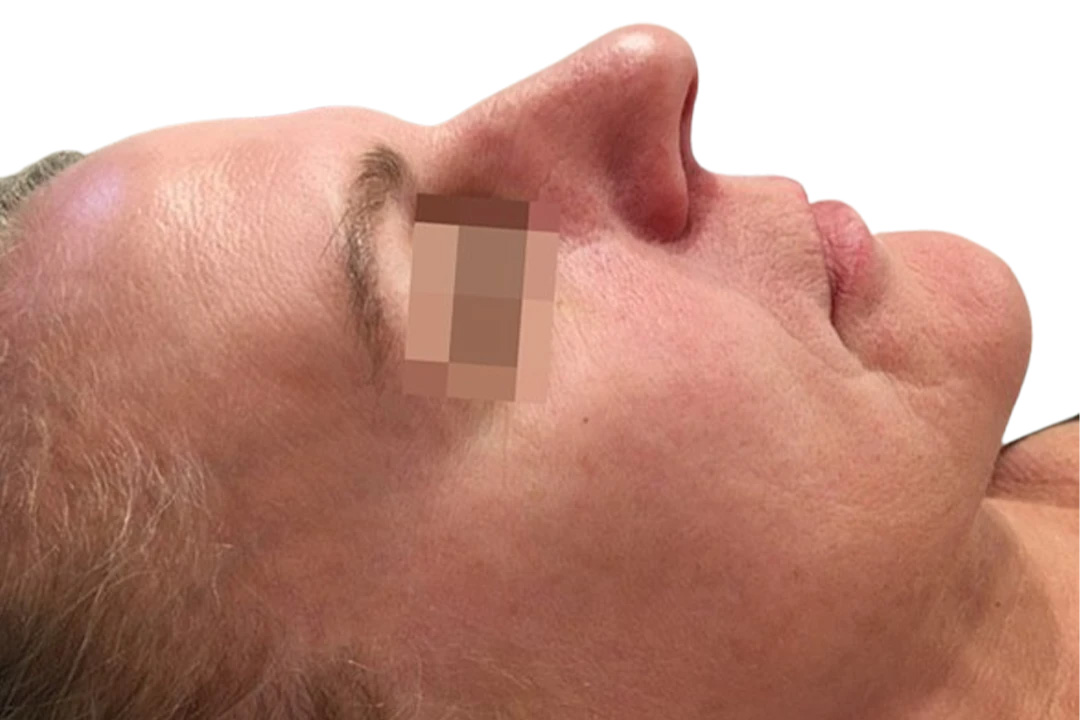
Three manufacturer photographs of pigment
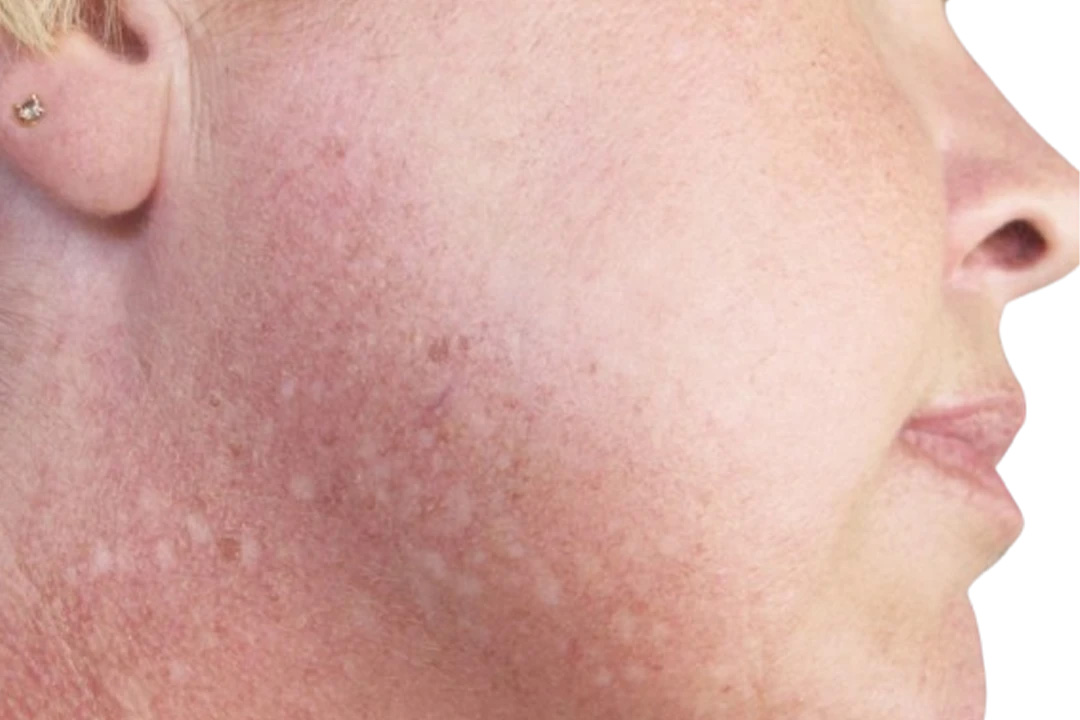
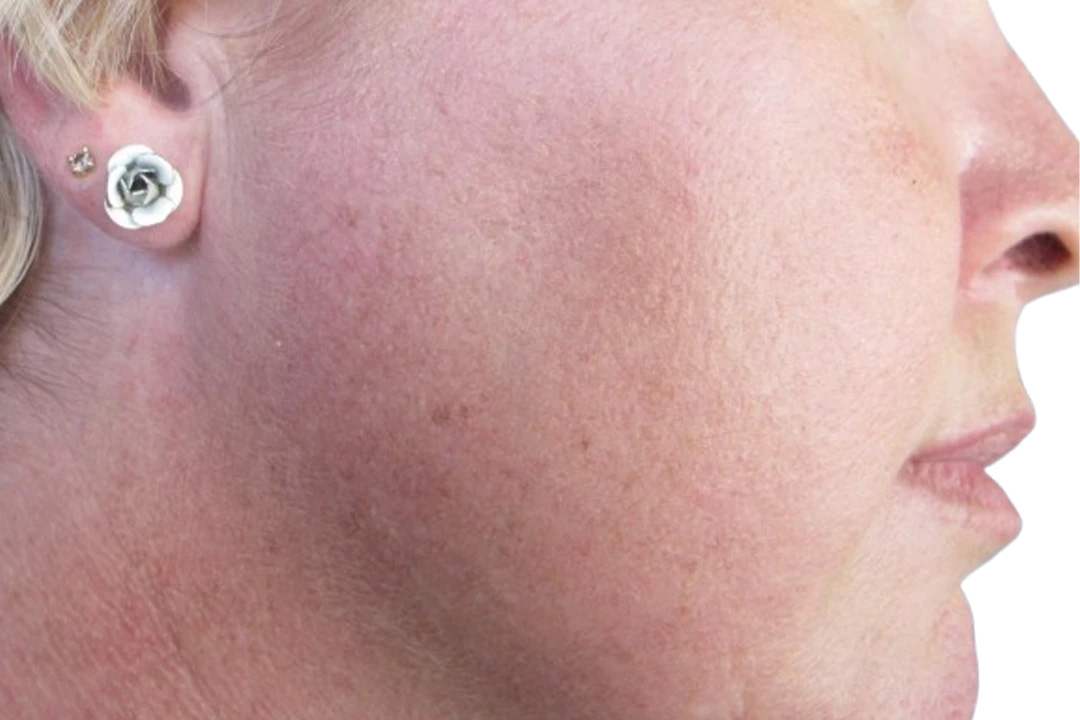
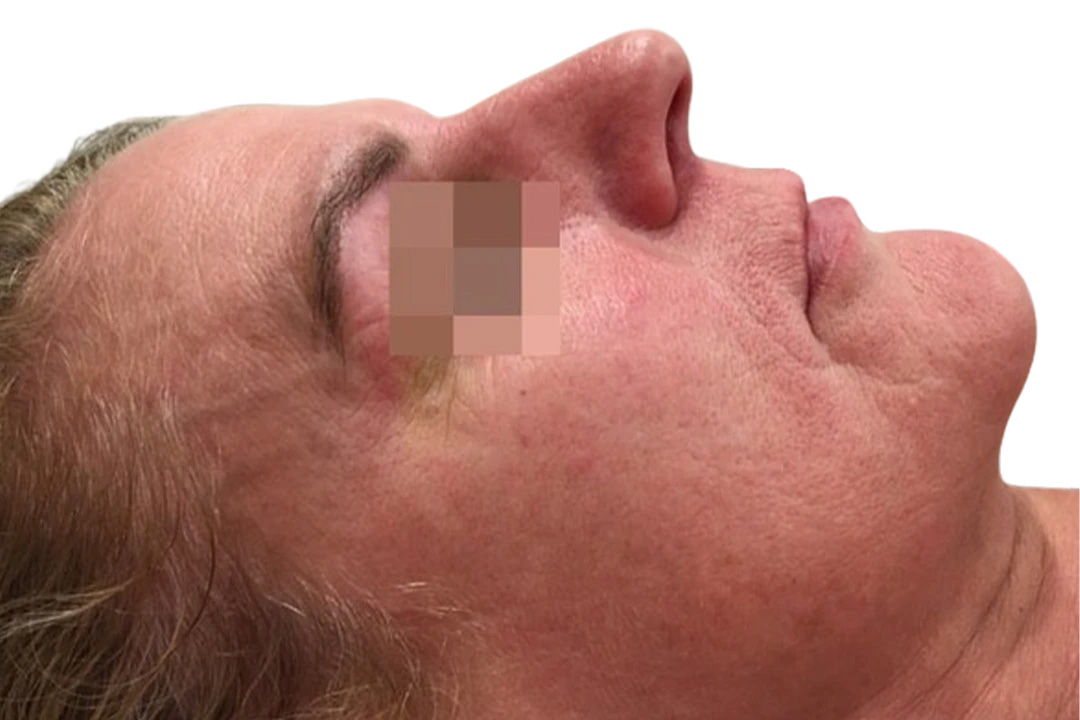
The first is a Rohrer Aesthetics slide of one brown spot on a nose. It was treated with the long-pulsed Nd:YAG on the Spectrum platform — the same platform we use, though the pigment work described above is done in its Q-switched mode rather than the long-pulsed one, so read it as what a 1064 nm laser does to a discrete spot. The two pairs after it came from Dermapen and were taken on the Dermapen 4, a mechanical microneedling device. Microneedling is not one of the tools listed above, because it is not where we start for pigment — for sun spots and uneven sun-related tone we reach for IPL and for the Q-switched Nd:YAG, and for melasma we reach for topicals and photoprotection first. We publish these because the concerns pictured are the ones this page is about, not as an offer of microneedling for pigment.
-
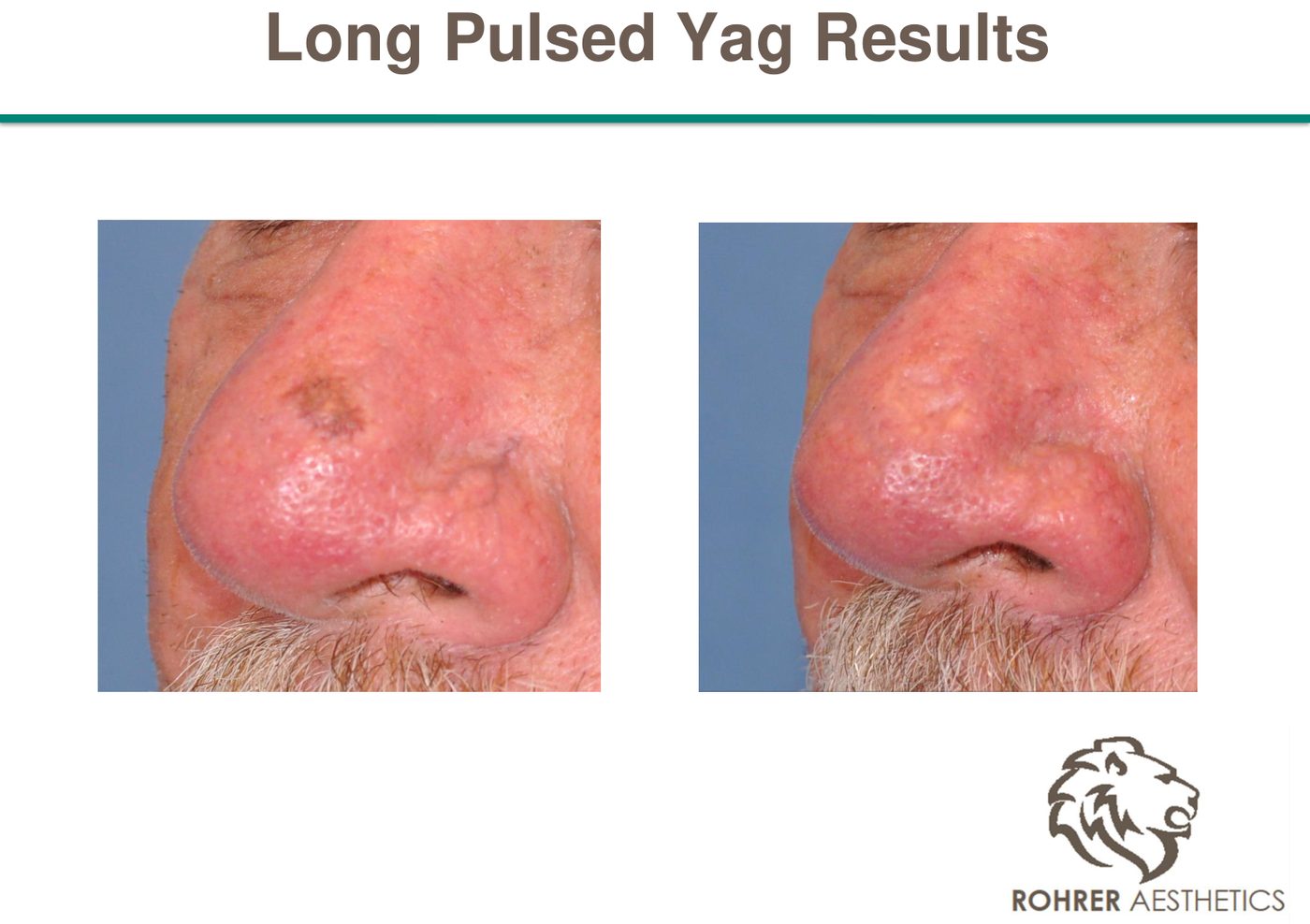
A brown spot on the side of the nose, not present in the after frame. The redness across the nose is unchanged between the two frames — this slide shows pigment work only, and nothing here addresses the background colour.
Rohrer Aesthetics slide · no clinician credited · not a patient of this practice
-
A cheek and jawline carrying both small pale spots and mottled brown colour. In the after photograph the tone is more even and the pale spots are less obvious. Background redness is present in both frames, and the earring and the hair are different, so this is not a controlled pair.
Dermapen 4 marketing photographs · supplied by the manufacturer · no clinician credited · not a patient of this practice
-
Cheek, jaw and upper neck with crepey texture and uneven colour from sun exposure. In the after photograph the surface reads smoother and the colour more even. The eyes are pixelated in both frames by the manufacturer, not by us.
Dermapen 4 marketing photographs · supplied by the manufacturer · no clinician credited · not a patient of this practice
Questions
What causes brown spots on my face?
Most often accumulated sun exposure. Ultraviolet light prompts pigment-making cells to work harder in patches, and over years that shows up as flat brown spots and a generally uneven tone on the face, neck, chest, and hands. Hormonal melasma and the marks left behind by past inflammation are the two other common causes, and they look similar enough that the useful first step is telling them apart.
How do I know whether my pigment is melasma or sun damage?
Some patterns are suggestive. Sun damage tends to be discrete spots scattered where the light lands. Melasma tends to be blotchy, symmetric patches across the cheeks, forehead, upper lip, or jawline, and it often flares in summer, with heat, or with hormonal changes. But the two frequently overlap on the same face, so we look at it in person before planning anything. That consultation is free.
Can melasma be cured?
No, and we would rather say so at the start than six months in. Melasma is a chronic, relapsing condition. It can usually be made lighter and held lighter with consistent photoprotection and the right topicals, but it tends to return when sun, heat, or hormones change. It is managed rather than resolved, and maintenance is part of the plan, not a sign the plan failed.
Does IPL work on melasma?
We do not use IPL on melasma. Melasma reacts to heat and to visible light as well as to ultraviolet, so the same energy that lifts sun spots can drive melasma darker. If your pigment is melasma, we steer toward the conservative approach it actually needs: strict tinted mineral sunscreen, prescription topicals, and low-fluence laser toning where it is appropriate.
How long does it take for dark spots to fade?
With topicals alone, plan on three to six months before you see meaningful change, and keep going after that. With in-office treatment on top, sun spots move faster — treated spots typically darken, then flake away over about a week, with a short series planned a few weeks apart. Post-inflammatory marks and melasma are slower than sun spots in almost every case.
Will the dark marks left by acne fade on their own?
Often yes, given time and daily sun protection — post-inflammatory hyperpigmentation is pigment sitting where the inflammation was, not a scar, and it fades as the skin turns over. Sunlight slows that down considerably. The other half of the work is calming whatever keeps causing the inflammation, because new breakouts keep laying down new marks.
Is laser treatment for pigment safe for darker skin tones?
It depends on the device, the settings, and the person, and no honest answer covers every skin tone in one sentence. Higher Fitzpatrick phototypes carry more risk of post-inflammatory hyperpigmentation from energy-based treatment, because epidermal melanin competes for the energy. That changes which device we choose, how conservatively we set it, and how we prepare the skin beforehand. We tell you which of our options is a reasonable choice for your skin and which is not.
Do I have to wear sunscreen after pigment treatment?
Yes, daily and indefinitely. Pigment treatment removes damage you already collected; sunscreen is what keeps you from collecting it again. Without daily broad-spectrum protection the spots come back, and melasma in particular can rebound quickly. We would rather you postpone treatment than start it without the sunscreen habit in place.
When should I see a physician about a dark spot instead of treating it cosmetically?
Any pigmented spot that is new, changing, growing, asymmetric, irregular in border or color, itchy, bleeding, or simply unlike your other spots should be evaluated medically before anyone treats it cosmetically. We examine lesions with a dermatoscope before treating, and anything ambiguous goes to dermatology for a biopsy rather than to a laser. Treating a lesion for appearance can remove the clue without addressing the cause.
Booking the right one
Three specific appointments can be booked directly from here. Pick by what you have rather than by the device, and if you are not sure which of the three describes your skin, book nothing and come in for the free consultation instead — we would rather sort that out in person than have you pay for the wrong appointment.
- Book treatment for one to three specific brown spots — a spot you can point at, rather than an overall unevenness.
- Book laser toning for melasma — low-fluence 1064 nm, and only where we have already agreed at a consultation that toning is right for your melasma.
- Book an IPL photofacial — full face — for scattered sun spots and generally uneven sun-related tone. Not for melasma.
Er:YAG resurfacing has its own booking line — a light peel across the full face, on the laser resurfacing page. Treating pigment on a single zone, and the prescription side of pigment care, are planned at the consultation rather than booked from this page.
Two ways to book
Call us — no login needed
(757) 586-4575. Answered 24 hours a day, including evenings and Saturdays. Most people are booked in about a minute.
Book online
Pick your time on our scheduler. New patients set up a quick login at the last step — that's how you reschedule yourself later. When you're done you'll land back here on a Booking confirmed page.
Didn't reach the confirmation page? Then nothing was booked — give us a call and we'll take care of it.
Newport News · Virginia
Start with a consultation. It’s free.
We’re a nurse practitioner–led aesthetic medicine practice, and every plan here starts with a conversation rather than a treatment. Bring the spots you’re worried about and your questions about them, and we’ll tell you what we think you’re looking at and what’s realistic.
Takes about a minute. You'll come back here to a confirmation page when you're booked — if you don't get there, call (757) 586-4575, any hour.